
• Link to Facebook
  • Link to Instagram
  • Link to Mail
  • Iridology
  • Your Health Coaching
  • Books
Jennifer Betesh
  • About
    • About Jennifer
  • Consultations
    • Iridology Assessments
      • Iridology – How To Take Your Iris Photos
    • Your Health Coaching
    • Personalized VIP Detox
    • Spa/Business Consulting
  • Your Symptoms
    • Fatigue/Foggy Brain
    • Skin Problems or Rashes
    • Digestive Problems
    • Food Allergies
    • Pain or Headaches
  • Testimonials
  • Stuff I like
    • My Favorite Juicer
    • My Favorite Things
    • Be a Health Coach
  • Blog
  • Store
  • Click to open the search input field Click to open the search input field Search
  • Menu Menu

Tag Archive for: coaching

What I Learned from taking a traditional Nutrition Course…and What I Didn’t Learn

by Jennifer Betesh

I recently completed the Nutrition, Health, and Lifestyle: Issues and Insights Course at Vanderbilt University’s School of Nursing. It was an extremely insightful experience to see what a traditional Nutritionist learns and eventually coaches or advocates to their clients.

All information in this article is for educational purposes only.
It is not for the diagnosis, treatment, prescription or cure of any disease or health condition.

I decided that it would be a unique “cultural exchange” to experience what traditional Nutritionists learn. Although I did learn a few useful things that I will outline below, for the most part I was shocked and disappointed to see the mis-truths and lack of unbiased information being presented to the students. Well, we all know that industry sponsors many universities through expensive grants, so could we really expect these teaching institutions to maintain an impartial perspective?

Many times during the course, I felt like I was being fed propaganda created directly by the food industry and/or Monsanto themselves. I actually feel bad for anyone who spends the money on a 4-year Nutrition Degree, because they may enter their study with high hopes of helping others, but how can they really help guide others through nutrition and diet when they are being taught lies? It’s truly a shame to see a system that is so broken and so far away from the relevance of a real natural, whole and pure diet and its effect on one’s health.

What I Learned

As I mentioned above, there were a few things that I learned from this course, or at least that I felt were truthful and relevant. They include:

-Professor showed several studies comparing a vegetarian diet to meat-based diet and how vegetarians have reduced risk of cancer, diabetes, etc.

-Professor mentioned that, “Even though we are living longer in the US, we are also living sicker.” I would agree!

-Professional explained superfoods, nutrient-dense foods, phyto-chemicals and importance of nutrients in the diet. Obviously this is important, and was factual in the course.
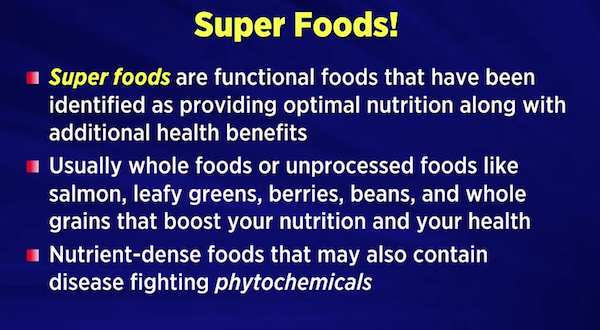
Superfood are Nutrient-Dense Foods
from Vanderbilt University’s School of Nursing

-Professor cited a study that showed vegan and vegetarian diet offer significant benefit in diabetes management. Additionally, it was pointed out that vegan and vegetarian diets also improve plasma lipid concentrations and have been shown to reverse atherosclerosis progression.

-Professor cited the position of the American Dietetic Association that “appropriately planned vegetarian diets, including total vegetarian or vegan diets, are healthful, nutritionally adequate, and may provide health benefits in the prevention and treatment of certain diseases.”

-Professor discussed the importance on B12 and Omega 3 Fatty Acids in a vegetarian and/or vegan diet. Certainly important factors to consider, and should be addressed for meat-eaters too!

-Professor accurately showed the excess of salt, fat and sugar in the Standard American Diet and the related high obesity rates in the United States.

Clearly these facts cannot be denied!
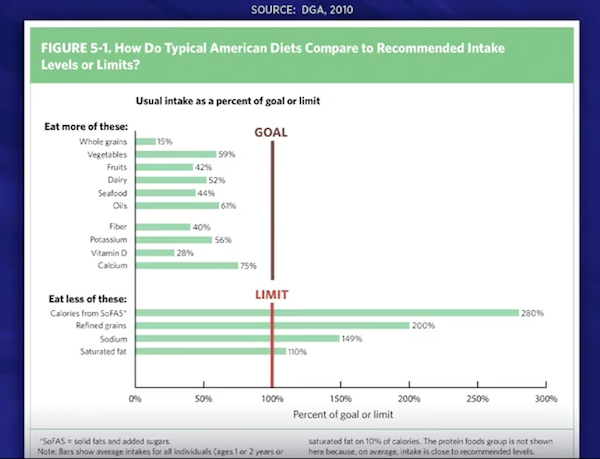
Typical American Diet: Excess in Fat, Salt and Sugar
from Vanderbilt University’s School of Nursing
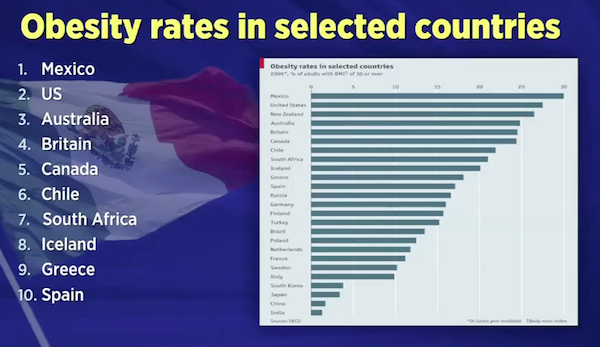
United States #2 in Obesity Rates
from Vanderbilt University’s School of Nursing

In summary, some good information about the benefits of a vegetarian and/or vegan diet was presented, and some factual information on obesity and the lack of fruits and vegetables in the Standard American (SAD) Diet was mentioned.

The other parts of the course are where I found myself wincing and shaking my head in utter dismay.

What I Didn’t Learn

Most notable items not addressed, under-addressed or mis-addressed in this course:

-Professor downplayed any danger associated with GMO (Genetically Modified Organism) foods, saying that “GMO has been around for centuries and centuries” and then stated that GMO has been around for “thousands of years.”

How did they isolate proteins in labs thousands of years ago exactly?

-Professor mentioned soy as a complete protein but of course no mention that 94% of soy in the USA is GMO and no mention or even peep about consuming GMO foods in relation to higher risk of infertility and food allergies.

Isn’t this of utmost importance when working with people and the nutritional relevance of their diet to health?

-Professor stated that, “Consumers may need to educate themselves before they jump on the bandwagon of something that they don’t understand,” and went on to add that with GMO foods “we are feeding areas of the world that don’t have the distribution and supply that we have.”

Spoon-fed propaganda from Monsanto PR…or what?

Anyone who is working with nutrition and food allergies, autism, ADHD and infertility (all of which have completed skyrocketed in the last decade worldwide) knows that something has seriously gone wrong.

If you are unsure in any way, please watch these documentaries on GMO foods and health: “The World According to Monsanto,” “Food, Inc.,” “The Future of Food,” “Seeds of Freedom,” “Genetic Roulette,” “Scientists Under Attack,” and “The GMO Trilogy.” Some of these documentaries can be watched for FREE online at http://topdocumentaryfilms.com/.

I also highly recommend the book The Unhealthy Truth: How Our Food is Making Us Sick and What We Can Do About It by Robyn O’Brien for extensively researched information and links to studies on GMO foods and food allergies. An excellent read for anyone looking to learn more on the subject of GMO foods and health!

Yes, it is true that we need to educate ourselves!

-Professor downplayed importance of organic foods, stating that “an organic apple is not going to be more nutritious than a conventionally grown apple.”

No mention of pesticides, GMO proteins or the simple fact that organic soil has more nutrients in the soil. How, why?? How can a “qualified” Nutritionist ignore the nutritional value of organic food?

In fact, reviews of multiple studies show that organic varieties do provide significantly greater levels of vitamin C, iron, magnesium, and phosphorus than non-organic varieties of the same foods (http://www.ncbi.nlm.nih.gov/pubmed/20359265).

Organic food has been shown to have higher nutrient concentrations,
yet Vanderbilt University’s Nutrition Course says: No Difference.

-Professor advocated the use of “fortified foods” as a way to increase nutrient consumption, specifically advocating milk fortified with Vitamin D, fortified breakfast cereals, and fortified sports drinks like Gatorade.

Why ignore the value of organic whole foods yet advocate processed foods that are chemically fortified with inorganic vitamins and minerals? No mention of the antibiotics and hormones in conventional milk, the added sugar in breakfast cereals or the chemical colorings in sports drinks. Wow.

-Professor downplayed the dangers of chemical food additives in the diet.

In my professional experience, more people are being affected by all types of food additives more than ever before, because food additives are being used in food more than ever before!

Flavor enhancers (MSG, ribonucleotide), nitrates, sulfites, aspartame and other artificial sweeteners and chemical colorings are creating an absolute health epidemic! To gloss over this issue and to not acknowledge the danger of food additives in relation to nutrition and health is both irresponsible and just plain idiotic. I’m truly devastated to see the education so lacking on this topic. Sadly, the food industry has a lot of money to hide the truth.
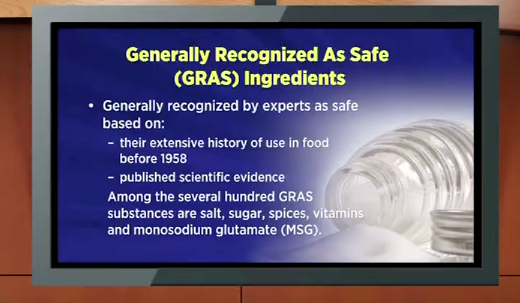
Nutrition Courses teach that MSG is “Generally Recognized as Safe” or GRAS
from Vanderbilt University’s School of Nursing

Because Monosodium Glutamate was used in foods before 1958, the FDA considers it as “Generally Recognized as Safe” or GRAS. Other foods which are categorized as GRAS are salt, pepper, vinegar and baking powder. How is it possible that MSG is considered as safe as vinegar? And hasn’t the amounts of concentrations of MSG increased in foods since 1958, making it a higher risk contaminant and something that should be re-evaluated in the interest of public health and safety?

The worst part of all is that this is what Nutritionists are learning in school. Will they be able to identify an MSG intolerance in their client? Chances are extremely slim, because they are taught that MSG is “safe!” I cannot count how many clients I have worked with suffering from migraines, insomnia, depression, heart palpitations, anxiety, vertigo, itchy rashes, puffiness, sensitivity to light and sound and even behavioral and learning problems in children: all of which were reversed when we removed MSG and/or Ribonucleotides and all hidden forms of MSG out of the diet.

You cannot advise people on food and not take into account the potential effect of chemical food additives!

-Professor spoke with David McCarty, Senior VP Operations of Smart Balance spreads for 30 minutes and praised his product line for being a good source of Omega 3 Fatty Acids and for being a “heart-friendly” food.

Smart Balance “butter” is not something that I even consider a FOOD!

What is natural about spreadable butter containing genetically modified (GMO) soy and artificial flavor which is surely where they are hiding the salty, savory flavor enhancers and/or some hidden form of MSG to actually give this greasy mess some type of taste that is palatable to humans?
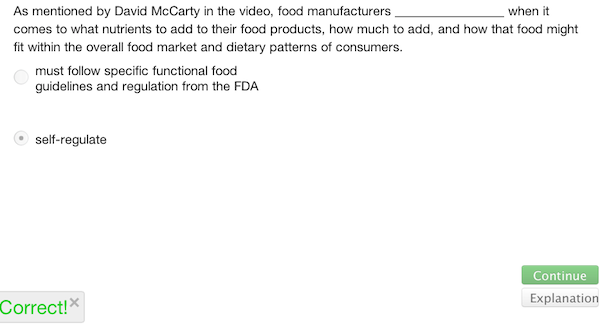
How are consumers protected when food companies “self-regulate”?
from Vanderbilt University’s School of Nursing

If you are a non-vegan, you are much better off eating REAL butter with 2 simple ingredients: butter and salt. I am amazed to see Smart Balance call itself a “heart healthy” food when Monosodium Glutamate (MSG) is known to cause heart palpitations. People may eat this mess and think they are having a heart attack!

Vegans can simply use extra-virgin olive oil, an organic almond butter or tahini (sesame seed) paste. People on a raw food vegan diet will not need any spread to put on bread, and they can use fresh lime or lime for salad dressing and add tahini to a raw cracker. Easy!

To summarize, I do not feel that I wasted my time by taking a traditional nutrition class. Actually, I would recommend it to anyone working with nutrition, diet, people and food. It’s important to know what the “mainstream” teaches in order to have a better understanding of what your client may have faced previously by seeing a traditional nutritionist in the past.

That said, there still may be some nutritionists who think and learn outside of the box and may actually have an awareness of other factors that affect food and health, mainly GMO foods, quality of food (organic vs. conventional) and the relation of food additives to health. As a client, the best thing to do is to check your nutritionist’s website or ask them if they will go to the level of food additives and food quality during your session. If they reply that their approach is centered only around protein, carbs, fats, minerals and vitamins, then please take my advice: keep shopping until you find someone who will go deeper to help you have the best health ever…because you deserve the very best, in food and in health!

For information on how to work with me for Your Best Health, please go to my Coaching Page.

More on Healthy Living:

  • Fasting Retreat, Organic Raw Food & Total Relaxation at Farm of Life in Costa Rica
  • Raw Food Recipe: Raw Mustard
  • Natural Charcoal Fluoride-Free Toothpaste from Korea
  • Finding Peace after Honey Boo Boo
  • Raw Food Recipe – Delicious Waldorf Salad

https://healthybliss.net/bliss/wp-content/uploads/2013/06/vanderbilt6.png 319 555 Jennifer Betesh https://healthybliss.net/bliss/wp-content/uploads/2014/11/hb_logo_01.png Jennifer Betesh2013-06-30 11:31:082018-06-29 07:55:42What I Learned from taking a traditional Nutrition Course…and What I Didn’t Learn

What I Learned from taking a traditional Nutrition Course…and What I Didn’t Learn

by Jennifer Betesh

I recently completed the Nutrition, Health, and Lifestyle: Issues and Insights Course at Vanderbilt University’s School of Nursing. It was an extremely insightful experience to see what a traditional Nutritionist learns and eventually coaches or advocates to their clients.

All information in this article is for educational purposes only.
It is not for the diagnosis, treatment, prescription or cure of any disease or health condition.

I decided that it would be a unique “cultural exchange” to experience what traditional Nutritionists learn. Although I did learn a few useful things that I will outline below, for the most part I was shocked and disappointed to see the mis-truths and lack of unbiased information being presented to the students. Well, we all know that industry sponsors many universities through expensive grants, so could we really expect these teaching institutions to maintain an impartial perspective?

Many times during the course, I felt like I was being fed propaganda created directly by the food industry and/or Monsanto themselves. I actually feel bad for anyone who spends the money on a 4-year Nutrition Degree, because they may enter their study with high hopes of helping others, but how can they really help guide others through nutrition and diet when they are being taught lies? It’s truly a shame to see a system that is so broken and so far away from the relevance of a real natural, whole and pure diet and its effect on one’s health.

What I Learned

As I mentioned above, there were a few things that I learned from this course, or at least that I felt were truthful and relevant. They include:

-Professor showed several studies comparing a vegetarian diet to meat-based diet and how vegetarians have reduced risk of cancer, diabetes, etc.

-Professor mentioned that, “Even though we are living longer in the US, we are also living sicker.” I would agree!

-Professional explained superfoods, nutrient-dense foods, phyto-chemicals and importance of nutrients in the diet. Obviously this is important, and was factual in the course.

Superfood are Nutrient-Dense Foods
from Vanderbilt University’s School of Nursing

-Professor cited a study that showed vegan and vegetarian diet offer significant benefit in diabetes management. Additionally, it was pointed out that vegan and vegetarian diets also improve plasma lipid concentrations and have been shown to reverse atherosclerosis progression.

-Professor cited the position of the American Dietetic Association that “appropriately planned vegetarian diets, including total vegetarian or vegan diets, are healthful, nutritionally adequate, and may provide health benefits in the prevention and treatment of certain diseases.”

-Professor discussed the importance on B12 and Omega 3 Fatty Acids in a vegetarian and/or vegan diet. Certainly important factors to consider, and should be addressed for meat-eaters too!

-Professor accurately showed the excess of salt, fat and sugar in the Standard American Diet and the related high obesity rates in the United States.

Clearly these facts cannot be denied!

Typical American Diet: Excess in Fat, Salt and Sugar
from Vanderbilt University’s School of Nursing

United States #2 in Obesity Rates
from Vanderbilt University’s School of Nursing

In summary, some good information about the benefits of a vegetarian and/or vegan diet was presented, and some factual information on obesity and the lack of fruits and vegetables in the Standard American (SAD) Diet was mentioned.

The other parts of the course are where I found myself wincing and shaking my head in utter dismay.

What I Didn’t Learn

Most notable items not addressed, under-addressed or mis-addressed in this course:

-Professor downplayed any danger associated with GMO (Genetically Modified Organism) foods, saying that “GMO has been around for centuries and centuries” and then stated that GMO has been around for “thousands of years.”

How did they isolate proteins in labs thousands of years ago exactly?

-Professor mentioned soy as a complete protein but of course no mention that 94% of soy in the USA is GMO and no mention or even peep about consuming GMO foods in relation to higher risk of infertility and food allergies.

Isn’t this of utmost importance when working with people and the nutritional relevance of their diet to health?

-Professor stated that, “Consumers may need to educate themselves before they jump on the bandwagon of something that they don’t understand,” and went on to add that with GMO foods “we are feeding areas of the world that don’t have the distribution and supply that we have.”

Spoon-fed propaganda from Monsanto PR…or what?

Anyone who is working with nutrition and food allergies, autism, ADHD and infertility (all of which have completed skyrocketed in the last decade worldwide) knows that something has seriously gone wrong.

If you are unsure in any way, please watch these documentaries on GMO foods and health: “The World According to Monsanto,” “Food, Inc.,” “The Future of Food,” “Seeds of Freedom,” “Genetic Roulette,” “Scientists Under Attack,” and “The GMO Trilogy.” Some of these documentaries can be watched for FREE online at http://topdocumentaryfilms.com/.

I also highly recommend the book The Unhealthy Truth: How Our Food is Making Us Sick and What We Can Do About It by Robyn O’Brien for extensively researched information and links to studies on GMO foods and food allergies. An excellent read for anyone looking to learn more on the subject of GMO foods and health!

Yes, it is true that we need to educate ourselves!

-Professor downplayed importance of organic foods, stating that “an organic apple is not going to be more nutritious than a conventionally grown apple.”

No mention of pesticides, GMO proteins or the simple fact that organic soil has more nutrients in the soil. How, why?? How can a “qualified” Nutritionist ignore the nutritional value of organic food?

In fact, reviews of multiple studies show that organic varieties do provide significantly greater levels of vitamin C, iron, magnesium, and phosphorus than non-organic varieties of the same foods (http://www.ncbi.nlm.nih.gov/pubmed/20359265).

Organic food has been shown to have higher nutrient concentrations,
yet Vanderbilt University’s Nutrition Course says: No Difference.

-Professor advocated the use of “fortified foods” as a way to increase nutrient consumption, specifically advocating milk fortified with Vitamin D, fortified breakfast cereals, and fortified sports drinks like Gatorade.

Why ignore the value of organic whole foods yet advocate processed foods that are chemically fortified with inorganic vitamins and minerals? No mention of the antibiotics and hormones in conventional milk, the added sugar in breakfast cereals or the chemical colorings in sports drinks. Wow.

-Professor downplayed the dangers of chemical food additives in the diet.

In my professional experience, more people are being affected by all types of food additives more than ever before, because food additives are being used in food more than ever before!

Flavor enhancers (MSG, ribonucleotide), nitrates, sulfites, aspartame and other artificial sweeteners and chemical colorings are creating an absolute health epidemic! To gloss over this issue and to not acknowledge the danger of food additives in relation to nutrition and health is both irresponsible and just plain idiotic. I’m truly devastated to see the education so lacking on this topic. Sadly, the food industry has a lot of money to hide the truth.

Nutrition Courses teach that MSG is “Generally Recognized as Safe” or GRAS
from Vanderbilt University’s School of Nursing

Because Monosodium Glutamate was used in foods before 1958, the FDA considers it as “Generally Recognized as Safe” or GRAS. Other foods which are categorized as GRAS are salt, pepper, vinegar and baking powder. How is it possible that MSG is considered as safe as vinegar? And hasn’t the amounts of concentrations of MSG increased in foods since 1958, making it a higher risk contaminant and something that should be re-evaluated in the interest of public health and safety?

The worst part of all is that this is what Nutritionists are learning in school. Will they be able to identify an MSG intolerance in their client? Chances are extremely slim, because they are taught that MSG is “safe!” I cannot count how many clients I have worked with suffering from migraines, insomnia, depression, heart palpitations, anxiety, vertigo, itchy rashes, puffiness, sensitivity to light and sound and even behavioral and learning problems in children: all of which were reversed when we removed MSG and/or Ribonucleotides and all hidden forms of MSG out of the diet.

You cannot advise people on food and not take into account the potential effect of chemical food additives!

-Professor spoke with David McCarty, Senior VP Operations of Smart Balance spreads for 30 minutes and praised his product line for being a good source of Omega 3 Fatty Acids and for being a “heart-friendly” food.

Smart Balance “butter” is not something that I even consider a FOOD!

What is natural about spreadable butter containing genetically modified (GMO) soy and artificial flavor which is surely where they are hiding the salty, savory flavor enhancers and/or some hidden form of MSG to actually give this greasy mess some type of taste that is palatable to humans?

How are consumers protected when food companies “self-regulate”?
from Vanderbilt University’s School of Nursing

If you are a non-vegan, you are much better off eating REAL butter with 2 simple ingredients: butter and salt. I am amazed to see Smart Balance call itself a “heart healthy” food when Monosodium Glutamate (MSG) is known to cause heart palpitations. People may eat this mess and think they are having a heart attack!

Vegans can simply use extra-virgin olive oil, an organic almond butter or tahini (sesame seed) paste. People on a raw food vegan diet will not need any spread to put on bread, and they can use fresh lime or lime for salad dressing and add tahini to a raw cracker. Easy!

To summarize, I do not feel that I wasted my time by taking a traditional nutrition class. Actually, I would recommend it to anyone working with nutrition, diet, people and food. It’s important to know what the “mainstream” teaches in order to have a better understanding of what your client may have faced previously by seeing a traditional nutritionist in the past.

That said, there still may be some nutritionists who think and learn outside of the box and may actually have an awareness of other factors that affect food and health, mainly GMO foods, quality of food (organic vs. conventional) and the relation of food additives to health. As a client, the best thing to do is to check your nutritionist’s website or ask them if they will go to the level of food additives and food quality during your session. If they reply that their approach is centered only around protein, carbs, fats, minerals and vitamins, then please take my advice: keep shopping until you find someone who will go deeper to help you have the best health ever…because you deserve the very best, in food and in health!

For information on how to work with me for Your Best Health, please go to my Coaching Page.

More on Healthy Living:

  • Integrate and Balance your Healthy Journey with your Work Life now!
  • Raw Food and Green Smoothie Classes in Seoul, Korea
  • Easy Recipe: Make organic pickles at home!
  • Healing Power of Onions: Can Onions absorb Bacteria, Viruses and Flu?
  • Raw Food Snack: Recipe for Sesame Balls or ‘Raw Halva’ Dessert

https://healthybliss.net/bliss/wp-content/uploads/2013/06/vanderbilt6.png 319 555 Jennifer Betesh https://healthybliss.net/bliss/wp-content/uploads/2014/11/hb_logo_01.png Jennifer Betesh2013-06-30 11:31:082018-06-29 07:55:42What I Learned from taking a traditional Nutrition Course…and What I Didn’t Learn

Affirmation

Affirmation: I am at peace with all that has happened, is happening, and will happen.

My book: Green Smoothies for Dummies

Buy on Amazon and iTunes!

Shop Healthy!

Green Smoothies: Everything you need!

Your Career in Health!

The Ultimate Detox

Get inspired!

Topics for a Healthier YOU!

Food for Thought

"If you can't fly, then run. If you can't run, then walk. If you can't walk, then crawl. But whatever you do, keep moving."
- Dr. Martin Luther King Jr.

About @healthybliss

Jennifer Betesh has been working with clean food, juices, smoothies and detox for over two decades to help people heal. Today, she shares her expertise worldwide, offering lectures, workshops, training and one-on-one consultations at various health and detox retreat centers. She provides Iridology Readings / Health Coaching via Skype and Phone to clients. When she’s not working, you’ll find her hiking in the mountains, walking along the sea or globe-trotting to a new health destination. > > Read More

New on the Blog

  • What is an elimination diet?
  • Intermittent fasting – What’s the best way?
  • How do you know when it’s time to STOP fasting
  • When is the BEST time (and WORST time) to START a detox
  • How to Ask the Right Questions at a Farmers Market

Disclaimer

The information provided on this site is for informational purposes only. It is not intended as a substitute for advice from your physician or other health care professional or any information contained on or in any product label or packaging. Always consult with a healthcare professional before starting any diet, exercise or supplementation program, before taking any medication, or if you have or suspect you might have a health problem. Read full disclaimer here.

Archive

  • March 2019
  • February 2019
  • March 2018
  • January 2018
  • December 2017
  • November 2017
  • August 2017
  • July 2017
  • June 2017
  • May 2017
  • March 2017
  • November 2016
  • January 2016
  • April 2015
  • March 2015
  • February 2015
  • January 2015
  • December 2014
  • November 2014
  • October 2014
  • September 2014
  • July 2014
  • June 2014
  • May 2014
  • April 2014
  • December 2013
  • November 2013
  • October 2013
  • September 2013
  • July 2013
  • June 2013
  • May 2013
  • April 2013
  • February 2013
  • January 2013
  • December 2012
  • November 2012
  • October 2012
  • September 2012
  • July 2012
  • June 2012
  • March 2012
  • February 2012
  • January 2012
  • October 2011
  • September 2011
  • August 2011
  • July 2011
  • June 2011
  • April 2011
  • February 2011
  • January 2011
  • December 2010
  • August 2010
  • July 2010
  • March 2010
  • February 2010
  • January 2010
  • December 2009
  • November 2009
  • October 2009
  • September 2009
  • August 2009
  • July 2009
  • June 2009
  • May 2009
  • April 2009
  • March 2009
  • January 2009
  • December 2008
  • November 2008
  • September 2008
  • August 2008
  • July 2008
  • June 2008
  • April 2008
  • March 2008
  • February 2008
  • August 2007
  • April 2007
Copyright ©2009 - 2026 Jennifer Betesh All Content.
  • Link to Facebook
  • Link to Instagram
  • Link to Mail
  • Blog
  • Disclaimer
  • Media/Press
  • FAQs
  • Contact
  • Books
Scroll to top Scroll to top Scroll to top