Raw Zucchini Rolls with Walnut Pesto and Cashew Cheese: Recipe

Are you looking for something different than another salad? Or looking to bring an eye-catching and mouth-watering dish to your next raw food potluck or healthy picnic? Try this recipe for Raw Zucchini Rolls and your friends and family will simply be amazed at how delicious healthy food can be. And of course, it’s gluten-free!
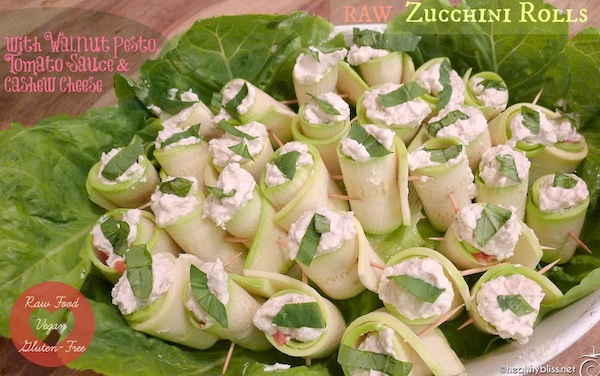
Raw Zucchini Rolls with Tomato Sauce, Cashew Cheese and Walnut Pesto – it’s easy to make!

I actually threw this dish together with what I had at home one day not using any recipe at all. That’s the beauty of learning how to cook – once you know the basics, you can use your creativity to make just about anything you want! My goal was to have a nice finger-food raw food platter. I saw that I had a lot of organic zucchini, so I said, hmmmm…I can make zucchini rolls, now what to put inside? First I made the tomato sauce and it was yummy, but I felt like it needed more texture. So, I made the walnut pesto. Then, I decided to top it off with some smooth and creamy raw cashew nut cheese and this gorgeous gourmet-looking raw pasta dish was born!

You can make this yourself at home. You will need either a blender or a mini-food processor, about 3-4 large organic zucchinis and the following ingredients:

Walnut Pesto Ingredients

  • 1 1/2 cup raw organic walnuts
  • 1 Tbsp. Extra Virgin Olive Oil
  • 1 cup organic fresh basil leaves (or cilantro)
  • 1/2 Tbsp. fresh lemon juice
  • Dash of Himalayan Salt

Raw Tomato Sauce Ingredients

  • 2 cups organic tomatoes, chopped
  • 1 Tbsp. Extra Virgin Olive Oil
  • 1-2 raw garlic cloves
  • 1/2 tsp. organic dried oregano leaves
  • 1/4 tsp. organic dried basil leaves
  • 1/4 tsp. organic cayenne pepper
  • 1 Tbsp. fresh lemon juice
  • 1/2 Tbsp. raw apple cider vinegar
  • 1 Tbsp. raw organic honey (optional)
  • Dash of Himalayan Salt

Raw Cashew Cheese Ingredients

  • 2 cups organic raw unsalted cashews
  • 1 Tbsp. fresh lemon juice
  • Dash of organic cumin powder
  • Dash of organic cayenne pepper
  • Dash of Himalayan Salt

How To Make a Raw Zucchini Rolls

1. Make the Walnut Pesto: Add the ingredients into a mini food processor or blender and pulse several times until the mixture is course but uniform in texture. Set aside in a glass container, covered and refrigerated for at least 2-3 hours to marinate.

2. Make the Tomato Sauce: Add the ingredients into a mini food processor or blender and pulse several times until the mixture is course but uniform in texture. Set aside in a glass container, covered and refrigerated for at least 2-3 hours to marinate.

3. Make the Cashew Cheese: Add the ingredients into a mini food processor or blender and blend for 1-2 minutes until smooth in texture. Set aside in a glass container, covered and refrigerated for at least 2-3 hours to marinate.

4. When you are ready to serve, prepare the zucchini strips: Peel the outer skin of each zucchini (the skin can have a bitter taste but also looks more like real “pasta” without the skin). Then use a peeler, mandolin or knife to cut the zucchini into flat strips.

5. Using one zucchini strip at a time, place 1 spoonful of tomato sauce and 1 spoonful of walnut pesto on the strip, then roll the strip, securing it with a toothpick. Top each zucchini roll with a dollop of cashew cheese and a small sliver of fresh basil leaf for decoration.

6. Serve on a plate of lettuce, with loving intention to share the gift of good health!

Note: If you are vegan, you can replace the raw organic honey with agave nectar or a dash of organic stevia powder.

For more on how to start a raw food diet, how to do a detox at home or what minerals you may specifically be deficient in, book a private health consult with me via Skype.

How to Book Your Health & Nutritional Coaching Session:

1. Take photos of your eyes with a digital camera.
2. Email the photos to me for approval.
3. We schedule a time to meet via phone or Skype!

More on Raw Food:
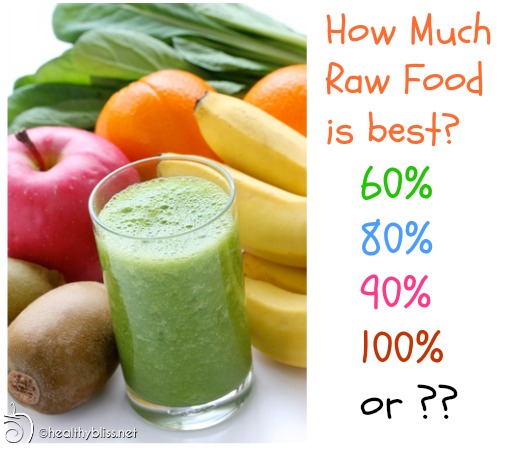
Do you need to eat 100% raw food for success? How much raw food is best?

Recently the New York Times ran an article in their online blog section entitled “Growing Up on Raw Foods” where the author discussed whether or not it is safe to raise children on a 100% raw food diet. I found this article to be very interesting for a number of reasons and I am so happy that it highlights some important factors to consider when transitioning to a raw food or vegan diet.

All information in this article is for educational purposes only.
It is not for the diagnosis, treatment, prescription or cure of any disease or health condition.

How much raw food do you need to eat for success?

Getting Iron and B12 on Vegan or Raw Foods

First, the author points out that children who eat a vegan or raw food diet have higher risk of anemia and vitamin B12 deficiency. As many of you know, I am a huge advocate of eating dark leafy green vegetables, which in my opinion, are the most important food to add to any diet, whether it be a vegan, vegetarian, gluten-free, Paleo, diabetic, heart healthy or weight loss diet. In fact, I wrote an article called My Boyfriend Followed my Raw Food Diet and Got Anemia to try and get people thinking about eating more leafy greens for a good vegan source of iron. B12 is also a valid concern (and actually meat eaters are often deficient in B12 too due to low absorption); for that I always recommend a high quality B12 supplement. Note: I do not recommend liquid B12 supplements because many people develop gum sensitivity and/or nerve pain in the teeth from B12 in liquid form.

Accepting your % of raw food

But, the highlight of this article for me was to read about how some well-known raw foodists are changing their 100% raw food status and are eating more cooked food in their diet:

“Some longtime raw-food evangelists are rethinking their devotion. Jinjee Talifero, who runs a raw-food education company with her husband, Storm, in Santa Barbara, Calif., was 100 percent raw for most of the last 20 years, until about a year ago, when financial and other considerations made it difficult to continue feeding their five children, ages 6 to 19, that way. “It was always like a borderline thing to keep enough weight on them,” she said, and getting proteins from cashews and almonds was proving too expensive.

Her children also ran up against social problems. “They were socially isolated, ostracized and simply left out,” said Ms. Talifero, who now incorporates cooked food in the family’s diet.

Sergei Boutenko, 29, a filmmaker in Ashland, Ore., ate only raw from 9 to 26, and for years his family preached the virtues of the diet. But, he said, “there was this constant hunger,” and the raw children he met seemed “underdeveloped and stunted.”

He now eats about 80 percent raw, with occasional meat and dairy. “When it takes 15 hours to make a raw food lasagna that wipes out two days of your life, it’s better to just make a vegan or vegetarian lasagna and move on with your day,” he said.”

The Daily Mail UK website had an article on raw food recently where Australian raw food advocate and follower of a fruitarian or 80-10-10 diet Freelee the Banana Girl explained that she remains ‘raw until four’ – meaning she eats no cooked or heated food until 4pm.

These articles make me so happy because finally, the raw food world seems to be letting go of the 100% perfect raw food pedestal. Even Gabriel Cousens (author of Conscious Eating) says that you can get the same results with eating an 80% raw food diet as you can with 100% raw food, but it will just take you a little longer to get there.

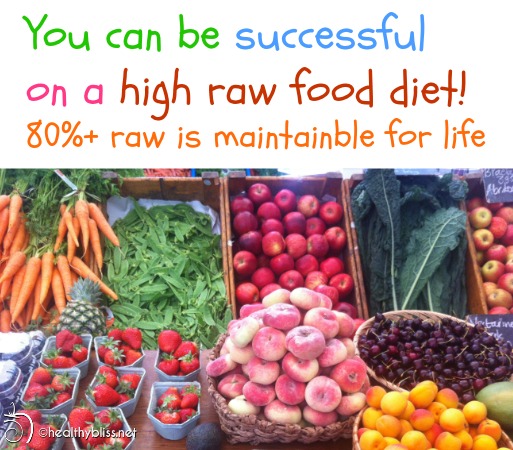
A high raw food diet is usually more than 2/3 or 66% raw food, and 80% is excellent

The conclusion: It’s ok to eat a high raw food diet, as long as you focus on quality of food and:

  • Choose organic fruit and veggies wherever possible
  • Prepare your food with loving intention
  • Avoiding processed foods and chemical food additives
  • Eat cooked food without guilt (because you are 100% human!)
  • Cook your food in healthy ways without heated oils, frying or charring the food

Remember, balance is the key to success. As Dr. Bernard Jensen says, “One cup of coffee won’t kill you, but one glass of orange juice won’t cure you either.”

What’s my % of RAW?

I was 100% for 2 years until I started traveling more and then I dropped down to 90% raw to accommodate my schedule, eating plain steamed veggies, an occasional plain baked potato or organic brown rice. After 8 years on the raw food path, I now sit comfortably at a high raw food diet which means I eat 85-100% raw food. My daily diet consists of green smoothies, green juices, huge salads, sprouts, nuts, seeds, fresh wheatgrass shots, homemade sauerkraut, kombucha and occasionally some organic cooked black beans, chickpeas, steamed vegetables, veggie soup with homemade broth, organic brown rice or red quinoa. I mostly follow the Hippocrates Diet or Ann Wigmore style of eating. Technically speaking, I am not a vegan because I do eat raw organic honey and other bee products like royal jelly on occasion. I made some mistakes with my raw food diet nutritionally along the way, and I’m going to reveal all my lessons learned in a new ebook, so stay tuned!

If you’re going to keep your new diet habits as a healthy way of living for life, it has to be a sustainable for life. Many experts agree that you have to eat at least 50% raw food to start seeing and feeling results (more energy, improved skin, better digestion, anti-aging & cellular repair, reversal of disease). Whether you’re eating 60 percent, 80 percent, 90 percent or 100 percent raw food, the most important thing to allow yourself to be is 100% human. As you go through the years of your life, your percentage of raw food may increase or decrease, and that’s okay! No matter what, the percentage of raw food that you are eating should feel right for you.

> Are you trying to transition to a raw food, vegan or vegetarian diet and feeling overwhelmed with all of the different opinions out there?

> Are you struggling emotionally and socially with changing your diet and feeling isolated or confused?

> Are you eating a healthy raw food or vegan diet and still feel tired, have trouble sleeping, or suffer from skin problems, hair loss, brittle nails, digestive problems, anxiety, depression, infertility, or dental problems?

> Do you want to change your diet but simply don’t know where or how to begin?

For more on how to start a raw food diet, how to do a detox at home or what minerals you may specifically be deficient in, book a private health consult with me via Skype.

How to Book Your Health & Nutritional Coaching Session:

1. Take photos of your eyes with a digital camera.
2. Email the photos to me for approval.
3. We schedule a time to meet via phone or Skype!

To read the New York Times article in its entirety, go here: Growing Up on Raw Foods

To read the Daily Mail UK article in its entirety, go here: ‘I lost 3st eating vast “mono meals”: Controversial diet guru who consumes 5lb of potatoes in one go says single-food feasts are key to weight loss and health

More on Raw Food:

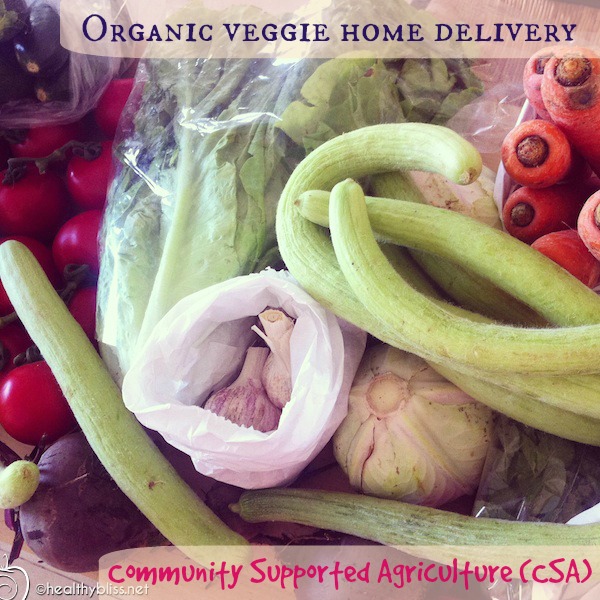
Get Affordable Organic Food with Community Supported Agriculture (CSA) Vegetable Home Delivery

Want to save time and money and get more affordable organic fruits and vegetables? Then check into finding a local CSA for organic home delivery in your area. Community Supported Agriculture or CSA is a way to connect consumers directly to organic farmers. With no store or “middle man” in between, you get more affordable produce that’s fresh and in season.

Get local organic produce delivered to your door & save money too!

How does a CSA work?

Basically, you invest in a “share” of the harvest, meaning you pay in advance for regular deliveries of organic, fresh, seasonal produce from local farmers. Every program varies in what it offers, when and where it is delivered and how much a share costs. Typically, you choose between a “small box” or a “large box” which is delivered weekly on a certain day (say every Tuesday or Thursday). The contents of the box will vary depending on what’s being harvested that week. For example, this week (in summer) in Israel I received: organic tomatoes, cucumber, lettuce, dill, parsley, beets, green chives, mint, pumpkin, spinach, Swiss chard, daikon, zucchini and watermelon. Other times I will get garlic, onion, lemons, papaya, apples, melon or kohlrabi with a mix of fresh greens that also vary depending on the time of year. On average, 1 large box will last me about 4-5 days. I usually need to supplement with my own store-bought organic fresh fruit because admittedly, you usually get more veggies than fruit in a CSA box. With the CSA that I belong to, there is also the option to order additional items, including local organic eggs, tahini, honey and olive oil (I don’t order any additional items but I know a lot of people who do). The box is delivered directly from the farm to your door.

The benefits of eating organic food

Organic food is higher in minerals because the soil in which its grown is a much better quality than the over-farmed, depleted and toxic soil you find in industrial farming. Without any hazardous pesticides either, organic food can decrease your risk of allergies, rashes, inflammation and asthma and keep your immune system strong. This is especially important for growing children. Organic food is also not irradiated or genetically modified (GMO), two more processes and man-handling added to the food supply today which can be harmful to your health.

And, my favorite thing about organic food? It tastes way better!!! My fresh organic produce is never bitter or bland. And a better natural taste has to be better for you. Once you try it, you will see for yourself!

The saddest thing I find about organic food is people seem to only invest their money in it at certain times in their life: mainly, when they’re pregnant, sick or have cancer. Outside of that, it can be really hard to convince anyone to spend money on organic veggies, fruit, nuts, seeds and/or grains. Even vegan, raw food, vegetarian and gluten-free folks will often turn their head at the added cost of organic. But why wait until you are sick or pregnant to start eating the best food for your body? If you eat organic food for years before your pregnancy, don’t you think you will be higher in minerals, less toxic and therefore increase your chances of a healthy pregnancy and baby? And perhaps if you invest in some high quality food now, you won’t ever get sick and if you do, you will recover much more quickly. If you put better fuel in your car, it will run better and last longer. Well, let’s add some extra miles to your life and keep your internal engine working great with high-quality organic food! You deserve the very best.

The benefits of using CSA delivery

1. You increase the amount of organic food in your diet.
2. It’s more affordable and fresher than buying organic produce in stores.
3. The fruit and vegetables are locally grown and in season.
4. You’re supporting small local businesses and farmers in your area.
5. You save time and hassle by enjoying home delivery.
6. You naturally get more variety in your diet.
7. You can experiment and try new veggies that you might not otherwise buy (like daikon or kohlrabi).

In fact, I can’t think of any reason not to join a local CSA! To get started, research your local community by googling “CSA organic delivery + your county, city or state” and see what you find. You can also inquire at your local health food store or Wholefoods market.

A good list of Organic Home Delivery farms in USA: Organic Consumers Directory List for USA

In Israel, there are 2 popular CSA services for Tel Aviv: Chubeza and Maggie’s Garden (I personally have tried both and now am happy with Chubeza). Find a complete list of Organic Home Delivery farms in Israel, including Jerusalem, the north to Herzilya and south to Ashkelon here: Times of Israel article on Eating Organic in Israel using local CSA

If you’re using a local CSA in your community, please list the link in the comments below with your city, state and country below and let’s share the good times of eating more natural, whole and pure food! I’m thoroughly enjoying a healthy week with yummy green smoothies, juices, raw food salads and desserts all with beautiful vibrant organic food!

For more on how to start a raw food diet, how to do a detox at home or what minerals you may specifically be deficient in, book a private health consult with me via Skype.

How to Book Your Health & Nutritional Coaching Session:

1. Take photos of your eyes with a digital camera.
2. Email the photos to me for approval.
3. We schedule a time to meet via phone or Skype!

More on Organic Food:

What’s the Best Juicer? How to Choose a Juicer

Buying a juicer is a commitment to actually start juicing. Believe me, I wish there was a self-cleaning juicer out there too, but there isn’t! I consider this a more advanced stage of healthy food prep because of the added time and effort it takes to make juice. For that reason, I encourage you to really think about what you’re most likely to use on a daily basis. Do you have extra time to prepare ingredients for juice and to clean the juicer? Or, are you more likely to blend a green smoothie that takes less than 5 minutes to make and can be stored in advance?

I recommend that you make green smoothies for at least 6 months before you even think about advancing to the world of green juices. When you’re comfortable with the green smoothie recipes and ingredients, it will be much easier for you to make the leap into juice.

When you’re ready, the next step is to decide what juicer is right for you. And if that wasn’t enough, there are actually 2 different types of juicers. If you’re not ready then take this information in as a side note, to be used at a later date, but don’t worry about the details too much now. Below, I explain the different types of juicers.

What to look for in a juicer

Features to look for in a juicer

With juicers, there are two main types: masticating and centrifugal. Those terms describe how the ingredients are mashed, spun and/or pressed and actually separated between a fiber and liquid form.

The other main feature to look for in a juicer is the size of the shaft where you place the ingredients for juicing. You will see some juicers listed as big mouth or wide mouth; that means you can take an entire apple or pear and easily fit the whole fruit in the juicer shaft as opposed to cutting it into quarter-size pieces and placing it in a smaller shaft. While it may seem that this feature makes it faster or easier to juice, it doesn’t change the cleaning time which is the most time-consuming part of the process.

Masticating

Masticating juicers are the best juicers for making green juice because the slow-press motor can easily squeeze the juice out of high-fiber leafy greens. Sometimes referred to as cold-press juicers, masticating juicers operate at a slow speed and produce a higher amount of juice. Masticating juicers can juice fruits, veggies, leafy greens and wheatgrass. They are usually sold online or in more specialty stores and they come at a higher price tag.

Centrifugal

Centrifugal juicers are readily available at normal retail outlets and are the most inexpensive type of juicer to purchase. With a centrifugal juicer, the ingredients are pulverized through a fast-spinning blade that extracts the juice through a strainer. These machines can’t handle leafy greens, wheatgrass, sprouts or herbs and are better suited for fresh and veggies. Because of the faster spin, they make less juice per volume of ingredients.

Top picks for juicers

Omega

The Omega 8004 is my personal top pick of juicers for making green juice. It’s a masticating juicer, and in my opinion, is easier to clean than other masticating brands or models. The 8004 has a great motor and can also juice wheatgrass (see below). Price starts at $199.95.

The Omega Juicer is a GREAT value for your money and an excellent juicer

Cuisinart

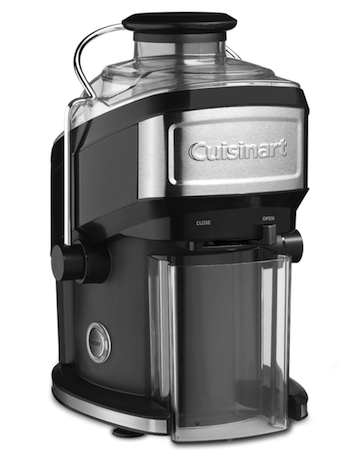
The Cuisinart Compact Juice Extractor is a centrifugal juicer that comes in at an affordable price with a nice design and a reliable brand name. Priced at $89.00.

Cuisinart Compact Juicer is a great value and a good starter juicer

Hamilton Beach

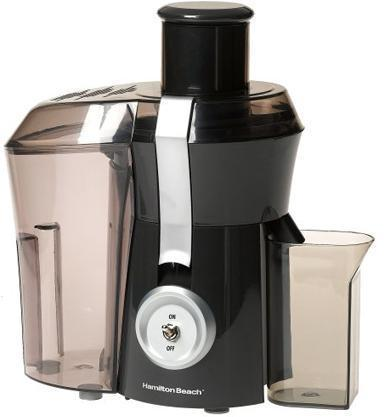
The Hamilton Beach Big Mouth Juice Extractor is also a centrifugal juicer with a nice clean, simple design. The fantastic price makes this juicer a great option if you’re on a budget. Priced at $59.85.

Good value for your money with this Hamilton Beach Juicer

Keeping your Juicer Clean

My advice for how to clean your juicer is this: Do not drink your juice until after you clean the juicer! If you drink your juice immediately, you’re much more likely to move onto something else and forget about the juicer until later. By then, all the pulp will be stuck to the juicer parts making a bigger job to scrub everything clean.

Your best bet: As soon as you finish juicing, unplug the juicer to make sure that the power is off. Take the juicer apart and rinse all the pieces with a sponge, warm water and dish detergent. Add the juice pulp to your compost pile if you have one. Once your juicer is on the drying rack, you can enjoy your freshly made juice! This is a house rule in my kitchen and it really works.

Choosing a wheatgrass juicer

If you’re interested in juicing your own wheatgrass at home, you’ll need a masticating juicer. The Omega 8004 is a great model for making fresh wheatgrass. Other options include the Champion juicer, and the Hurom vertical slow-press juicer.

Do you need to juice, and should you be juicing?

That’s a great question! Find out more about whether or not you even need to juice here.

Looking for a new blender too? Check out my guide on Battle of the Blenders: Which one is best?

For more on how to start a raw food diet, how to do a detox at home or what minerals you may specifically be deficient in, book a private health consult with me via Skype.

How to Book Your Health & Nutritional Coaching Session:

1. Take photos of your eyes with a digital camera.
2. Email the photos to me for approval.
3. We schedule a time to meet via phone or Skype!

More on Juicing and Smoothies: