
• Link to Facebook
  • Link to Instagram
  • Link to Mail
  • Iridology
  • Your Health Coaching
  • Books
Jennifer Betesh
  • About
    • About Jennifer
  • Consultations
    • Iridology Assessments
      • Iridology – How To Take Your Iris Photos
    • Your Health Coaching
    • Personalized VIP Detox
    • Spa/Business Consulting
  • Your Symptoms
    • Fatigue/Foggy Brain
    • Skin Problems or Rashes
    • Digestive Problems
    • Food Allergies
    • Pain or Headaches
  • Testimonials
  • Stuff I like
    • My Favorite Juicer
    • My Favorite Things
    • Be a Health Coach
  • Blog
  • Store
  • Click to open the search input field Click to open the search input field Search
  • Menu Menu

Tag Archive for: blue zones

Top 10 Secrets for Good Health and Longevity: How to Create Your Personal ‘Blue Zone’

by Jennifer Betesh

If you want to know the best way to do something, you find a successful person and ask them how they did it, right?

That’s exactly what researchers have done in search of the healthiest places in the world to live, also known as ‘Blue Zones,’ a term coined by demographers who started mapping out areas of the world where people live measurably longer lives. Two noteworthy books of interest have been written on the subject: The Blue Zones: 9 Lessons for Living Longer by Dan Buettner and Healthy at 100 by John Robbins. I’ve recently found myself drawn more and more to explore what secrets our elders hold in finding the real truth to an anti-aging diet, or a longevity diet or a ‘youthgevity’ diet…probably terms that our elders at 90 years of age and older have never even heard of!

All information in this article is for educational purposes only.
It is not for the diagnosis, treatment, prescription or cure of any disease or health condition.
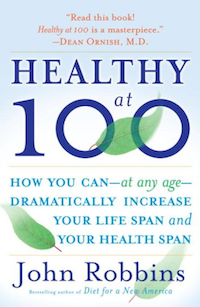
Healthy at 100 by John Robbins
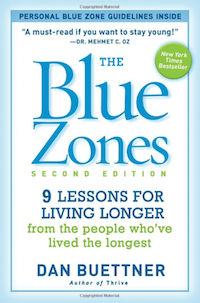
The Blue Zones: 9 Lessons for Living Longer

Especially in answering countless questions from workshops and talks around the world, a large portion which involve questions such as ‘what’s the BEST food for (insert dis-ease name here)’ or ‘what’s the BEST supplement I need to take’ or ‘what food will help me (insert goal here: lose weight, be happy, feel great, clear skin, gain energy, cure constipation, improve eyesight, increase fertility, reduce anxiety, etc. etc. etc.),’ I can see from a wider perspective that, well, basically, people are just not getting it! No one food creates disease and no one food cures it either! We have to start looking at the diet and lifestyle as a whole to start getting the results we want.

We all know that no one can eat a handful of watercress and become instantly cured!

I hope you can agree with me there. People don’t want to hear that they may have to make long-term changes to their diet and lifestyle in order to get long-term results, especially in this fast-fix world that’s programmed to appease all instant gratification requests. And, if you try the ‘magic pill method’ by taking every new Dr. Oz must-have supplement, after one year of watching Dr. Oz every day you will need to take 365 supplements per day in order to keep up! Clearly, that doesn’t seem like the best approach to real health!

So, what is it? How do we find the key to Longevity and Happiness?

Healthy at 100 by John Robbins

Healthy at 100 discusses several of the more known but perhaps under-documented world Blue Zones such as the Hunza Valley in Pakistan and Vilcabamba, Ecuador (where I am currently staying for 2 months by the way!) and also discusses more well-documented Blue Zones such as Okinawa, Japan. When I say ‘documented,’ that means being able to prove the person’s identity and being able to verify their date of birth with local birth records, so we can say with absolutely certainty that the centenarian (a person who lives over 100) who lives there is really a centenarian.

Blue Zone vs. SAD Diet

The main difference between a Blue Zone diet and a Standard American Diet (SAD) is that the Blue Zone cultures eat no refined sugar and no refined carbohydrates; and instead eat plenty of whole grains and many vegetables grown locally and in season, and they incorporate healing foods and superfoods into their diet naturally. According to John Robbins, the author of Heathy at 100, “Vegetables play a prominent role in the Hunzan diet, particularly greens, including mustard greens, spinach and lettuce, root vegetables such as carrots, turnips, potatoes, and radishes, an assortment of beans, chickpeas (garbanzo beans), lentils, and other sprouted legumes. They cultivate many kinds of herbs for both culinary and medicinal purposes, including mint and thyme. They grow flaxseeds, and rare is the meal that does not contain freshly ground flaxmeal in one form or another. In Hunza, a large part of the diet is eaten uncooked.”

He goes on to explain, “In the summer, as much as 80% of the food is eaten in its natural state. Vegetables in season are picked just prior to consumption and almost always eaten raw. Fresh corn on the bob, for example, is never cooked. In the winter, Hunzans soak lentils, beans and peas in water for several days, then lay them out on wet cloths in the sun. They are eaten raw when they begin to sprout.”

The view from my house in Vilcabamba, Ecuador, an ‘unofficial’ Blue Zone

Exercise also plays a huge role in the anti-aging process. Every area that was researched highlighted daily exercise as an integral part of life, and the people know that this is one of their secrets to vibrant health. “So great is the recognition of the healing power of walking to visit a friend that there is a saying in Vilcabamba that each of us has two ‘doctors’ – the left leg and the right leg,” writes John Robbins.

What’s happening in the good ‘ol USA

  • How many of us numb ourselves with cigarettes, tranquilizers, drugs, alcohol, or unhealthful diets in an effort to escape how isolated we feel?
  • How many of us become chronic workaholics or become preoccupied by other unhealthy obsessions in an attempt to avoid the inner barrenness caused by the breakdown of relationships, family and community?

He adds, “Many of the traditional Okinawan proverbs about eating sound like phrases you might find on the wall of a health food stores in the West. One such proverb translates as “Food should nourish life – this is the best medicine.” And another: “One who eats whole food will be strong and healthy.” If North Americans lived more like the elder Okinawans, we would have to close 80% of the coronary care units and 1/3 of the cancer wards in the United States, and a lot of nursing homes would also be out of business.”

Hmmm, that sounds pretty good to me!

Top 5 Secrets for Longevity and Anti-Aging from Healthy at 100

    1. Eat many colors. Foods’ natural colors are not just treats for the eye but also signs of important nutrients such as antioxidants.

    2. When you crave something crunchy, try raw vegetables or nuts instead of salty chips.

    3. Avoid heating oils to the smoking point. For the fat in your diet, eat walnuts, almonds, hazelnuts, sunflower seeds, avocados and other nuts and seeds.

    4. Shun trans-fatty acids. Stay away from margarine, vegetable shortening, commercial pastries, deep-fried food, and most prepared snacks and convenience foods.

    5. Don’t pollute your body. Don’t eat junk food. Go to your kitchen cupboard and get rid of any food products that no longer serve your potential to be radiantly fit and healthy.

The Blue Zones: 9 Lessons for Living Longer

Now, let’s look at the Blue Zones: 9 Lessons for Living Longer, and see what Dan Buettner, the author, discovered after traveling to 5 current and documented world Blue Zones: Nicoya Peninsula in Costa Rica, Sardinia in Italy, Okinawa in Japan, the Seventh-Day Adventists community in Southern California USA, and Ikaria in Greece.

“Good Years” is a Very Important Concept

In the book, Robert Kane point out that, “there are two issues here. How long can I live? The other is: How well can I live? And those are different questions. Living an extra two years on life support may not necessarily be your goal. Yes, “Good Years” is a very important concept.”

“You’ve got a bunch of people who are professing to be physicians or scientists, who are saying that they can stop or reverse the aging process. I will tell you that real scientists cannot do such a thing, so what makes the public think that these people can?” asks Tom Perls.

Things that Successful Centenarians Don’t Do

They don’t get plastic surgery or botox i.e. get unnecessary surgeries which can weaken their immune system; They don’t watch excessive amounts of television; They don’t complain, gossip or criticize others; They don’t worry or stress about the small things; They don’t overeat. In Japan, they say “Hara hachi bu” before each meal. This is a Confucian-inspired saying that means “Eat until your are 80 percent full.”

Things that Successful Centenarians Do

They eat natural, whole and pure foods high in flavonoids and natural anti-oxidants; They eat simple, non-processed local foods; They exercise as part of their daily routine, usually walking long distances (more than 2 miles and up to 6 miles) every day; They incorporate healing foods like turmeric, ginger and mugwort into their daily diet; They maintain a sense of purpose, keep a sense of humor and they have a positive outlook on life; They keep the family unit together, taking care of elders within the family even at the later stages in life (that’s the power of love!).

Top 5 Secrets for Longevity and Anti-Aging from The Blue Zones Book

    1. Eat more plants (i.e. leafy greens)! While not all centenarians are vegetarians, they all eat a very high vegetable and fruit-based diet with variety in whole nuts, seeds and grains. If they eat meat or fish, it’s only on occasion and not in the daily diet. They also eat simple meals with only whole, natural ingredients.

    2. Stay active. Get outside and walk every day. Work on a small outdoor garden. Getting regular, low-intensity exercise like daily walks appears to help reduce your chances of having heart disease and certain cancers.

    3. Have a sense of purpose and keep hard at work. Successful centenarians feel needed and want to contribute to a greater good. They enjoy physical work all of their lives (i.e. no couch potatoes!!).

    4. Drink fresh herbal teas made from peppermint, oregano, rosemary, chamomile or sage on a daily basis. Add healing foods like fresh turmeric and ginger to your diet. This helps your body detoxify on a regular basis, naturally!

    5. Take time to rest and fast occasionally. The Seventh-Day Adventists practice a weekly Sabbath or day of rest to spend time with the family and re-connect with nature. In Greece, The Ikarians traditionally follow the Greek Orthodox Christian calendar which calls for periodic fasting throughout the year.

Caloric restriction -a type of fasting that cuts about 30 percent of calories out of the normal diet -is the only proven way to slow the aging process in mammals.

How to Create your ‘Personal Blue Zone’

    1. Eat a high-raw food organic and nutrient-dense diet.
    2. Minimize stress. Laugh More. Enjoy each day!
    3. Exercise daily – get out and move.
    4. Form friendships and meaningful relationships.
    5. Have a sense of purpose with your life.

Or, as Michael Pollan said, “Eat food. Not too much. Mostly plants.”

Your Happiness and Longevity Matters!

So there you have it! Everything this website and my life’s work is all about will help you to lead a healthy happy, long enjoyable disease-free life! Let’s keep supporting each other on our journeys enjoying good health and a happy life!

Products from Amazon.com

‹ ›

More on Longevity:

  • Earliest Raw Food and Fasting Book: The Ancient Essene Gospel of the Peace
  • Motivational Health Quotes from Paul Bragg
  • Intermittent fasting – What’s the best way?
  • Vilcabamba, Ecuador: The Raw Food Valley of Longevity… or Just Hype?
  • Do you need to eat 100% raw food for success? How much raw food is best?

https://healthybliss.net/bliss/wp-content/uploads/2013/04/bluezone_300.png 454 300 Jennifer Betesh https://healthybliss.net/bliss/wp-content/uploads/2014/11/hb_logo_01.png Jennifer Betesh2013-04-30 19:03:552018-06-29 07:55:43Top 10 Secrets for Good Health and Longevity: How to Create Your Personal ‘Blue Zone’

Top 10 Secrets for Good Health and Longevity: How to Create Your Personal ‘Blue Zone’

by Jennifer Betesh

If you want to know the best way to do something, you find a successful person and ask them how they did it, right?

That’s exactly what researchers have done in search of the healthiest places in the world to live, also known as ‘Blue Zones,’ a term coined by demographers who started mapping out areas of the world where people live measurably longer lives. Two noteworthy books of interest have been written on the subject: The Blue Zones: 9 Lessons for Living Longer by Dan Buettner and Healthy at 100 by John Robbins. I’ve recently found myself drawn more and more to explore what secrets our elders hold in finding the real truth to an anti-aging diet, or a longevity diet or a ‘youthgevity’ diet…probably terms that our elders at 90 years of age and older have never even heard of!

All information in this article is for educational purposes only.
It is not for the diagnosis, treatment, prescription or cure of any disease or health condition.

Healthy at 100 by John Robbins

The Blue Zones: 9 Lessons for Living Longer

Especially in answering countless questions from workshops and talks around the world, a large portion which involve questions such as ‘what’s the BEST food for (insert dis-ease name here)’ or ‘what’s the BEST supplement I need to take’ or ‘what food will help me (insert goal here: lose weight, be happy, feel great, clear skin, gain energy, cure constipation, improve eyesight, increase fertility, reduce anxiety, etc. etc. etc.),’ I can see from a wider perspective that, well, basically, people are just not getting it! No one food creates disease and no one food cures it either! We have to start looking at the diet and lifestyle as a whole to start getting the results we want.

We all know that no one can eat a handful of watercress and become instantly cured!

I hope you can agree with me there. People don’t want to hear that they may have to make long-term changes to their diet and lifestyle in order to get long-term results, especially in this fast-fix world that’s programmed to appease all instant gratification requests. And, if you try the ‘magic pill method’ by taking every new Dr. Oz must-have supplement, after one year of watching Dr. Oz every day you will need to take 365 supplements per day in order to keep up! Clearly, that doesn’t seem like the best approach to real health!

So, what is it? How do we find the key to Longevity and Happiness?

Healthy at 100 by John Robbins

Healthy at 100 discusses several of the more known but perhaps under-documented world Blue Zones such as the Hunza Valley in Pakistan and Vilcabamba, Ecuador (where I am currently staying for 2 months by the way!) and also discusses more well-documented Blue Zones such as Okinawa, Japan. When I say ‘documented,’ that means being able to prove the person’s identity and being able to verify their date of birth with local birth records, so we can say with absolutely certainty that the centenarian (a person who lives over 100) who lives there is really a centenarian.

Blue Zone vs. SAD Diet

The main difference between a Blue Zone diet and a Standard American Diet (SAD) is that the Blue Zone cultures eat no refined sugar and no refined carbohydrates; and instead eat plenty of whole grains and many vegetables grown locally and in season, and they incorporate healing foods and superfoods into their diet naturally. According to John Robbins, the author of Heathy at 100, “Vegetables play a prominent role in the Hunzan diet, particularly greens, including mustard greens, spinach and lettuce, root vegetables such as carrots, turnips, potatoes, and radishes, an assortment of beans, chickpeas (garbanzo beans), lentils, and other sprouted legumes. They cultivate many kinds of herbs for both culinary and medicinal purposes, including mint and thyme. They grow flaxseeds, and rare is the meal that does not contain freshly ground flaxmeal in one form or another. In Hunza, a large part of the diet is eaten uncooked.”

He goes on to explain, “In the summer, as much as 80% of the food is eaten in its natural state. Vegetables in season are picked just prior to consumption and almost always eaten raw. Fresh corn on the bob, for example, is never cooked. In the winter, Hunzans soak lentils, beans and peas in water for several days, then lay them out on wet cloths in the sun. They are eaten raw when they begin to sprout.”

The view from my house in Vilcabamba, Ecuador, an ‘unofficial’ Blue Zone

Exercise also plays a huge role in the anti-aging process. Every area that was researched highlighted daily exercise as an integral part of life, and the people know that this is one of their secrets to vibrant health. “So great is the recognition of the healing power of walking to visit a friend that there is a saying in Vilcabamba that each of us has two ‘doctors’ – the left leg and the right leg,” writes John Robbins.

What’s happening in the good ‘ol USA

  • How many of us numb ourselves with cigarettes, tranquilizers, drugs, alcohol, or unhealthful diets in an effort to escape how isolated we feel?
  • How many of us become chronic workaholics or become preoccupied by other unhealthy obsessions in an attempt to avoid the inner barrenness caused by the breakdown of relationships, family and community?

He adds, “Many of the traditional Okinawan proverbs about eating sound like phrases you might find on the wall of a health food stores in the West. One such proverb translates as “Food should nourish life – this is the best medicine.” And another: “One who eats whole food will be strong and healthy.” If North Americans lived more like the elder Okinawans, we would have to close 80% of the coronary care units and 1/3 of the cancer wards in the United States, and a lot of nursing homes would also be out of business.”

Hmmm, that sounds pretty good to me!

Top 5 Secrets for Longevity and Anti-Aging from Healthy at 100

    1. Eat many colors. Foods’ natural colors are not just treats for the eye but also signs of important nutrients such as antioxidants.

    2. When you crave something crunchy, try raw vegetables or nuts instead of salty chips.

    3. Avoid heating oils to the smoking point. For the fat in your diet, eat walnuts, almonds, hazelnuts, sunflower seeds, avocados and other nuts and seeds.

    4. Shun trans-fatty acids. Stay away from margarine, vegetable shortening, commercial pastries, deep-fried food, and most prepared snacks and convenience foods.

    5. Don’t pollute your body. Don’t eat junk food. Go to your kitchen cupboard and get rid of any food products that no longer serve your potential to be radiantly fit and healthy.

The Blue Zones: 9 Lessons for Living Longer

Now, let’s look at the Blue Zones: 9 Lessons for Living Longer, and see what Dan Buettner, the author, discovered after traveling to 5 current and documented world Blue Zones: Nicoya Peninsula in Costa Rica, Sardinia in Italy, Okinawa in Japan, the Seventh-Day Adventists community in Southern California USA, and Ikaria in Greece.

“Good Years” is a Very Important Concept

In the book, Robert Kane point out that, “there are two issues here. How long can I live? The other is: How well can I live? And those are different questions. Living an extra two years on life support may not necessarily be your goal. Yes, “Good Years” is a very important concept.”

“You’ve got a bunch of people who are professing to be physicians or scientists, who are saying that they can stop or reverse the aging process. I will tell you that real scientists cannot do such a thing, so what makes the public think that these people can?” asks Tom Perls.

Things that Successful Centenarians Don’t Do

They don’t get plastic surgery or botox i.e. get unnecessary surgeries which can weaken their immune system; They don’t watch excessive amounts of television; They don’t complain, gossip or criticize others; They don’t worry or stress about the small things; They don’t overeat. In Japan, they say “Hara hachi bu” before each meal. This is a Confucian-inspired saying that means “Eat until your are 80 percent full.”

Things that Successful Centenarians Do

They eat natural, whole and pure foods high in flavonoids and natural anti-oxidants; They eat simple, non-processed local foods; They exercise as part of their daily routine, usually walking long distances (more than 2 miles and up to 6 miles) every day; They incorporate healing foods like turmeric, ginger and mugwort into their daily diet; They maintain a sense of purpose, keep a sense of humor and they have a positive outlook on life; They keep the family unit together, taking care of elders within the family even at the later stages in life (that’s the power of love!).

Top 5 Secrets for Longevity and Anti-Aging from The Blue Zones Book

    1. Eat more plants (i.e. leafy greens)! While not all centenarians are vegetarians, they all eat a very high vegetable and fruit-based diet with variety in whole nuts, seeds and grains. If they eat meat or fish, it’s only on occasion and not in the daily diet. They also eat simple meals with only whole, natural ingredients.

    2. Stay active. Get outside and walk every day. Work on a small outdoor garden. Getting regular, low-intensity exercise like daily walks appears to help reduce your chances of having heart disease and certain cancers.

    3. Have a sense of purpose and keep hard at work. Successful centenarians feel needed and want to contribute to a greater good. They enjoy physical work all of their lives (i.e. no couch potatoes!!).

    4. Drink fresh herbal teas made from peppermint, oregano, rosemary, chamomile or sage on a daily basis. Add healing foods like fresh turmeric and ginger to your diet. This helps your body detoxify on a regular basis, naturally!

    5. Take time to rest and fast occasionally. The Seventh-Day Adventists practice a weekly Sabbath or day of rest to spend time with the family and re-connect with nature. In Greece, The Ikarians traditionally follow the Greek Orthodox Christian calendar which calls for periodic fasting throughout the year.

Caloric restriction -a type of fasting that cuts about 30 percent of calories out of the normal diet -is the only proven way to slow the aging process in mammals.

How to Create your ‘Personal Blue Zone’

    1. Eat a high-raw food organic and nutrient-dense diet.
    2. Minimize stress. Laugh More. Enjoy each day!
    3. Exercise daily – get out and move.
    4. Form friendships and meaningful relationships.
    5. Have a sense of purpose with your life.

Or, as Michael Pollan said, “Eat food. Not too much. Mostly plants.”

Your Happiness and Longevity Matters!

So there you have it! Everything this website and my life’s work is all about will help you to lead a healthy happy, long enjoyable disease-free life! Let’s keep supporting each other on our journeys enjoying good health and a happy life!

Products from Amazon.com

‹ ›

More on Longevity:

  • Hollywood Celebrities and Supermodels are Drinking Green Smoothies!
  • 70-Year-Old Looks 30, Reveals Fountain of Youth (Yep, Raw Food!)
  • Healing Power of Onions: Can Onions absorb Bacteria, Viruses and Flu?
  • Cilantro Hot Sauce Recipe! For a Spicy Dip or Salad Dressing
  • Vilcabamba, Ecuador: The Raw Food Valley of Longevity… or Just Hype?

https://healthybliss.net/bliss/wp-content/uploads/2013/04/bluezone_300.png 454 300 Jennifer Betesh https://healthybliss.net/bliss/wp-content/uploads/2014/11/hb_logo_01.png Jennifer Betesh2013-04-30 19:03:552018-06-29 07:55:43Top 10 Secrets for Good Health and Longevity: How to Create Your Personal ‘Blue Zone’

Affirmation

Affirmation: I am at peace with all that has happened, is happening, and will happen.

My book: Green Smoothies for Dummies

Buy on Amazon and iTunes!

Shop Healthy!

Green Smoothies: Everything you need!

Your Career in Health!

The Ultimate Detox

Get inspired!

Topics for a Healthier YOU!

Food for Thought

"If you can't fly, then run. If you can't run, then walk. If you can't walk, then crawl. But whatever you do, keep moving."
- Dr. Martin Luther King Jr.

About @healthybliss

Jennifer Betesh has been working with clean food, juices, smoothies and detox for over two decades to help people heal. Today, she shares her expertise worldwide, offering lectures, workshops, training and one-on-one consultations at various health and detox retreat centers. She provides Iridology Readings / Health Coaching via Skype and Phone to clients. When she’s not working, you’ll find her hiking in the mountains, walking along the sea or globe-trotting to a new health destination. > > Read More

New on the Blog

  • What is an elimination diet?
  • Intermittent fasting – What’s the best way?
  • How do you know when it’s time to STOP fasting
  • When is the BEST time (and WORST time) to START a detox
  • How to Ask the Right Questions at a Farmers Market

Disclaimer

The information provided on this site is for informational purposes only. It is not intended as a substitute for advice from your physician or other health care professional or any information contained on or in any product label or packaging. Always consult with a healthcare professional before starting any diet, exercise or supplementation program, before taking any medication, or if you have or suspect you might have a health problem. Read full disclaimer here.

Archive

  • March 2019
  • February 2019
  • March 2018
  • January 2018
  • December 2017
  • November 2017
  • August 2017
  • July 2017
  • June 2017
  • May 2017
  • March 2017
  • November 2016
  • January 2016
  • April 2015
  • March 2015
  • February 2015
  • January 2015
  • December 2014
  • November 2014
  • October 2014
  • September 2014
  • July 2014
  • June 2014
  • May 2014
  • April 2014
  • December 2013
  • November 2013
  • October 2013
  • September 2013
  • July 2013
  • June 2013
  • May 2013
  • April 2013
  • February 2013
  • January 2013
  • December 2012
  • November 2012
  • October 2012
  • September 2012
  • July 2012
  • June 2012
  • March 2012
  • February 2012
  • January 2012
  • October 2011
  • September 2011
  • August 2011
  • July 2011
  • June 2011
  • April 2011
  • February 2011
  • January 2011
  • December 2010
  • August 2010
  • July 2010
  • March 2010
  • February 2010
  • January 2010
  • December 2009
  • November 2009
  • October 2009
  • September 2009
  • August 2009
  • July 2009
  • June 2009
  • May 2009
  • April 2009
  • March 2009
  • January 2009
  • December 2008
  • November 2008
  • September 2008
  • August 2008
  • July 2008
  • June 2008
  • April 2008
  • March 2008
  • February 2008
  • August 2007
  • April 2007
Copyright ©2009 - 2026 Jennifer Betesh All Content.
  • Link to Facebook
  • Link to Instagram
  • Link to Mail
  • Blog
  • Disclaimer
  • Media/Press
  • FAQs
  • Contact
  • Books
Scroll to top Scroll to top Scroll to top