Knowing Botanical Food Families for Cross-Reactivity Allergies
If you have any food sensitivities, intolerances or allergies, then it’s definitely important to check this Botanical Food Family list. When you have a sensitivity to one food, you may also have a “cross-reactivity” or sensitivity to other foods within the same botanical family. A cross-reactivity can occur when the proteins in one allergen food are like the proteins in another. Foods within the same botanical family often contain similar proteins. If you are sensitive to one particular food within a botanical family, you may also be sensitive to other foods within the same family of foods.
All information in this article is for educational purposes only.
It is not for the diagnosis, treatment, prescription or cure of any disease or health condition.
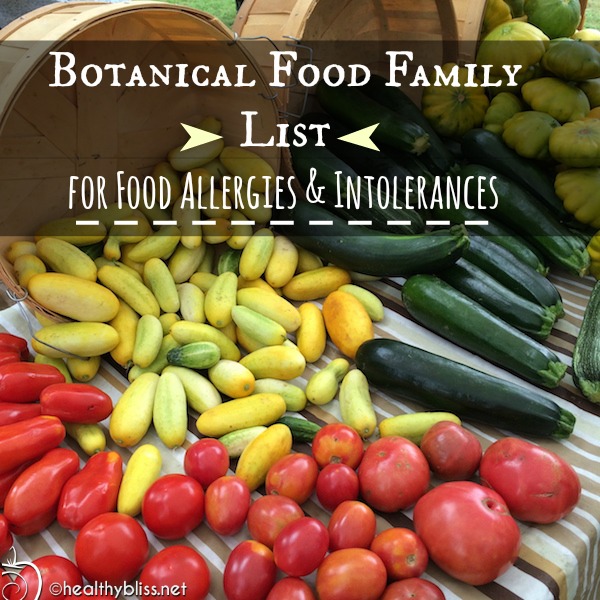
Check the Botanical Food Family List against your allergies
Testing for food allergies can also become tricky due to the occurrence of cross-reactivity. You may get a positive test for a food that has the same protein as another food, and it’s the other food that you are more sensitive or allergic too. For that reason, it’s always important to check the Botanical Food Family list for any sensitivity or allergy that you may think you have. Then, be on the lookout for other foods within the same botanical family. Note that tree nut allergies are especially prone to cross-reactivity sensitivities.
The 8 most common food allergies (also known as “the Big 8”) include:
- Milk
- Eggs
- Fish
- Crustacean shellfish
- Tree nuts
- Peanuts
- Wheat
- Soybean
Food Allergy
The “Big 8” account for about 90% of all food allergies in the United States. However, most people don’t have a true allergy to a food. A true food allergy occurs when the immune system makes a type of antibody (called IgE) to proteins in a particular food. The antibody is created because the body looks at that protein as an invader or a toxin and tried to eradicate it. This IgE reaction can be tested in a food allergy test. Usually with a food allergy, the reaction occurs very quickly and is severe. Often times there is a feeling of throat tightness. Anaphylaxis and loss of consciousness can also occur. If you have are having an allergic reaction, you should always seek medical attention immediately.
Food Intolerance
Most people do not have a true “IgE reaction” to a food. Rather, they fall within the grey area of food intolerance. A food intolerance can still make you feel miserable, and cause reactions such as skin rashes, itching, hives, urticaria, swelling of the skin, nausea, stomach cramps, headaches, insomnia, vomiting, diarrhea, breathing difficulty (wheezing, repeated throat clearing, cough) and even pain in the joints. But, you can’t get a positive IgE test result. The best way to identify a food intolerance is to eliminate that food, and then re-assess your symptoms. To learn more about the difference between a food allergy and a food intolerance, go here. In some cases, we need to develop a clear outline for an elimination diet where we eliminate foods in an ordered approach. In these cases, we also need to be on the lookout for any cross-reactivity within the same botanical family of foods.
Food Additive Intolerance
In addition to having food intolerances or allergies, I find that a lot of people are sensitive to certain additives in foods. This is something we always need to consider when anyone is having a chronic condition. Even 100% certified organic products can contain certain problematic food additives. The categories I work mostly with include flavor enhancers, colorings, preservatives and stabilizers/emulsifiers. This is an area that many nutritionists and health practitioners are not aware of, and many of my clients have gone through several healers with no avail before finding me. Their first comments are usually in the realm of, “Wow, I’m not crazy after all!” and “I wish I had found you sooner!” Food additives are often hidden under other terms. There are many legal loopholes that food companies use to “hide” the additives in “so-called healthy” foods.
Botanical Families of Foods
Use the list below as a reference for better understanding your food allergy or intolerance. Note that fish and shellfish are also included below, even though they’re not in a plant kingdom family. What’s most important is to get to know your body and how it’s reacting to certain proteins in foods. Long-term, working on improving your gut health will also help to lessen the chance of developing more allergies. The importance of digestive health and bacterial balance is not to be underestimated. In fact, a recent study from Australia just proved that 2/3 of peanut allergies were reversed after giving the patients specific probiotics (source: Murdoch Children’s Research Institute).
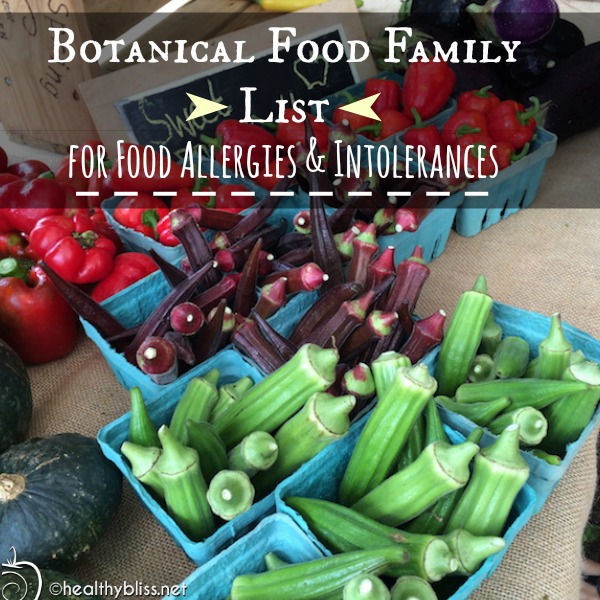
Check this list for Cross Reactivity!
Botanical Food Family List
Apple Family (Rose Family): Apple, Apple Cider, Apple Vinegar, Apple Pectin, Quince, Pear (The apple family is part of the bigger rose family)
Arrowroot: Arrowroot
Arum Family: Dasheen, Poi, Taro
Banana: Banana, Plantain
Birch: Filbert, Hazelnut
Brazil Nut: Brazil Nut
Buckwheat: Buckwheat, Garden Sorrel, Rhubarb
Cactus: Cactus, Prickly Pear, Tequila
Capers: Capers Cashew: Cashew, Mango, Pistachio
Cereals: Bamboo Shoots; Barley; Barley, Malt; Bran (wheat); Cane sugar; Cane Molasses; Chestnut, Water; Chestnut, Ling nut; Chestnut, Singhara nut; Corn ; Corn Meal ; Corn Starch ; Corn Oil ; Corn Sugar; Corn syrup; Corn dextrose; Corn glucose ; Corn cerelose; Farina (wheat); Graham flour (wheat) ; Gluten flour (wheat) ; Millet; Patent Flour (wheat); Oats; Rice; Rye; Sorghum; Wheat; Wheat flour; Wheat Germ; Wheat (whole) flour; Wild Rice.
Citrus: Angostura; Citrange; Citron; Grapefruit; Kumquat; Lemon; Lime; Orange; Tangerine
Cochliospermum Family: Karaya Gum, Guaiac Gum
Composite Family (Aster): Absinthe; Artichoke; Artichoke, Jerusalem; Calomel; Celtuse; Chicory; Dandelion; Endive; Escarole; Head Lettuce; Lettuce, Leaf ; Lettuce; Oyster Plant, Salsify; Sesame Seeds/ Oil; Sunflower/ Oil/ Seeds; Vermouth; Vermouth (Ragweed); Vermouth (Pyrethrum); Yarrow.
Crustaceans: Crab; Crayfish; Lobster; Prawns; Shrimp.
Cyperaceae Family (a Sedge): Chinese Waterchestnut
Curry Powder: not a single food but a blend of spices.
Ebony: Persimmon Flax – Linseed oil, flaxseed, flaxseed oil
Fresh Water Fish: Bass, Catfish, Croaker, Perch, Pike, Salmon, Smelt, Trout, Whitefish.
Fungus: Mushroom, Yeast/Antibiotics.
Ginger: Arrowroot, Cardamon, Ginger, Turmeric
Gooseberry: Currant, Gooseberry
Goosefoot (Beet): Beet, Sugar; Chard, Kochia, Lambs Quarters, Spinach, Thistle.
Gourd (Melon): Casaba; Cantaloupe; Cucumber; Honey Dew; Muskmelon; Persian Melon; Pumpkin; Squash; Vegetable Marrow; Water Melon. Grape: Brandy; Champagne; Crème of Tartar; Grape; Raisin; Wine; Wine Vinegar.
Heath: Cranberry, Blueberry, Huckleberry, Wintergreen.
Holly: Mate.
Honeysuckle: Elderberry.
Iris: Saffron. Laurel: Avocado, Bay Leaves, Camphor, Cinnamon, Laurel, Sassafras.
Legume: Acacia; Acacia Gum; Alfalfa; Arabic; Black-eyed pea; Carob; Carob (St. John’s Bread); Cassia; Chick Pea; Field Pea; Green Bean; Green Pea; Guar gum; Jack bean; Karaya Gum; Kidney bean; Lentil; Licorice; Lima bean; Locust Bean Gum; Mungo Bean; Navy Bean; Peanut; Peanut oil; Pinto Bean; Soybean; Soybean oil/flour/lecithin; Split Pea; String Bean; Talca Gum; Tamarind; Tonka bean; Tragancanth Gum; Urd Flour.
Lily: Asparagus, Chives, Garlic, Leek, Onion, Sparsparilla.
Litchi: Litchi Nut.
Mallow: Cottonseed meal, Cottonseed oil, Okra.
Maple: Maple syrup and maple sugar.
Miscellaneous: Honey (watch if you are allergic to bee venom).
Mint: Basil, Horehound, Marjoram, Mint, Oregano, Peppermint, Rosemary, Sage, Savoury, Spearmint, Thyme.
Mussels: Abalone, Clam, Mussel, Oyster, Scallop, Squid.
Morning Glory: Jicama, Sweet Potato, Yam.
Mulberry: Breadfruit, Fig, Hops, Mulberry.
Mustard: Broccoli, Brussel Sprouts, Cabbage, Cauliflower, Celery Cabbage, Chinese Cabbage, Collard, Colza Shoots, Kale, Kohlrabi, Kraut, Horse Radish, Mustard, Mustard Greens, Radish, Rutabaga, Turnips, Watercress.
Myrtle: Allspice, Cloves, Eucalyptus, Guava, Paprika, Pimento.
Nightshade: Brinjal, Cayenne, Capsicum, Eggplant, Ground Cherry, Banana Pepper, Bell Pepper, Chili Pepper, Green Pepper, Red Pepper, Sweet Pepper, Paprika, Pimento, Potato, Tabasco, Thorn Apple, Tobacco, Tomato.
Nutmeg: Mace, Nutmeg.
Olive: Olive, olive oil.
Orchid: Vanilla
Palm: Coconut, Date, Palm Cabbage, Sago.
Parsley: Angelica, Anise, Carrots, Celery, Celeriac, Caraway, Celery Seed, Coriander, Cumin, Dill, Fennel, Parsley, Parsnips, Sweet Cicily, Water Celery.
Pawpaw: Pawpaw, papaya, papain.
Pepper: Black pepper, white pepper.
Pine: Juniper, Pinion nut.
Pineapple: Pineapple.
Plum: Almond, Apricot, Cherry, Nectarine, Peach, Plum, Prune Plum.
Pomegranate: Pomegranate.
Poppy: Poppy seed.
Rose: Blackberry, Boysenberry, Dewberry, Loganberry, Strawberry, Youngberry. (see also Apple family).
Salt Water Fish: Bass, Cod, Flounder, Herring, Mackerel, Mullet, Salmon.
Spurge: Tapioca.
Stercula: Cocoa, Cola Bean, Chocolate (Cocoa).
Tea: Tea.
Walnut: Butternut, Hickory nut, Pecan, Black Walnut, English Walnut.
This list is from http://www.foodallergygourmet.com/
How to Book Your Health & Nutritional Coaching Session:
1. Take photos of your eyes with a digital camera.
2. Email the photos to me for approval.
3. We schedule a time to meet via phone or Skype!
More on Food Allergies:
- What is an elimination diet?
- Knowing Botanical Food Families for Cross-Reactivity Allergies
- Is your Olive Oil fake or “cut” with inferior oils? Check this list!
- Detox Reaction vs. Allergic Reaction or Intolerance – Which one is it?
- The ‘New’ MSG – Is it even more deadly than MSG itself? Ribonucleotides & The Ribo Rash
- Are you eating Processed Foods? Improve the quality of your food, your health & your life!
- Sea Salt with Chemical Additives?! Check for E535 & E536 Yellow Prussiate of Soda (YPS)
- The Truth in Food Labeling – Food Additives to Avoid & Hidden Sources of MSG
- Detox Reaction vs. Allergic Reaction or Intolerance – Which one is it?
- The ‘New’ MSG – Is it even more deadly than MSG itself? Ribonucleotides & The Ribo Rash