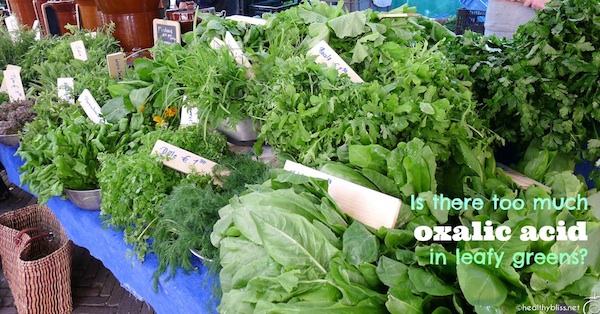
Do Green Smoothies have too much Oxalic Acid?

“Some people suggest that the oxalic acid in leafy green veggies can increase your risk of kidney stones. In fact, studies show that the real risk factors for kidney stones are not drinking enough water, suffering from magnesium deficiency, and not having enough calcium in your diet.

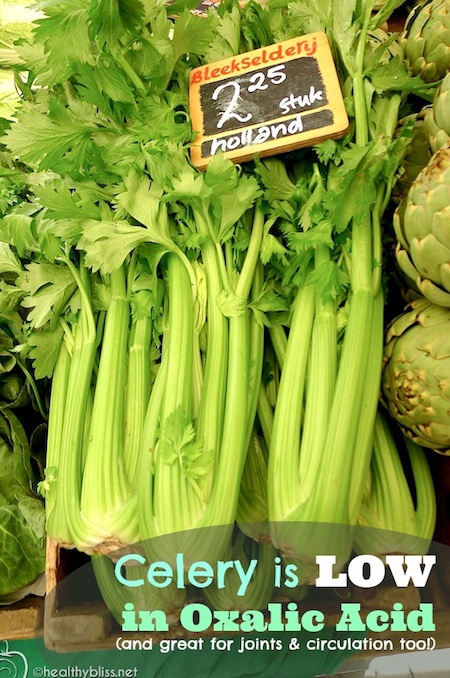
True, certain leafy greens, such as spinach, Swiss chard, beet greens, kale, and collard greens, are high in oxalic acid. If you suffer from kidney disease or have only one kidney, minimize your intake of these greens. Leafy greens that are low in oxalic acid include lettuce greens, bok choy, celery, and all fresh herbs except parsley.

All information in this article is for educational purposes only.
It is not for the diagnosis, treatment, prescription or cure of any disease or health condition.
Is there too much Oxalic Acid in greens like kale, spinach, or Swiss Chard?

Is there too much Oxalic Acid in greens like kale, spinach, or Swiss Chard?

A healthy individual should have no problem with the oxalic acid in certain greens. Keep in mind that green smoothies are a mixture of fresh fruits and greens, and the combination of these two types of foods helps to alkalize (neutralize) the effects of oxalic acid. You’re much more likely to get into trouble with oxalate foods if you eat them on their own without any alkaline foods to balance the acid.”*

Think Variety!

When you have variety in your greens (and all of your fruits, veggies, nuts, and seeds), you can’t overdo any one food. If someone says to me, “Will I get kidney stones if I eat a bunch of kale every day for 3 months?” My answer is, “Why on earth would you be eating kale every day for 3 months???

Many people’s brains today are set into “one magic food” thinking, but that’s not what works for full body health. Having variety in your diet ensures that your body gets all the nutrients it needs from different fruits and veggies in different seasons throughout the year. A better way to approach your greens is like this: kale one day, celery one day, Swiss chard one day, cilantro one day, spinach one day, bok choy one day and beet greens one day. Do you see how easy that can be? Your body will be delighted at all the variety in those greens and your kidneys will stay happy from the balance of oxalic acid.

Friend or Foe?

Other high oxalic acid foods include chocolate, peanuts and peanut butter, pistachios, sesame seeds, black tea and coffee. Combine that with an acid-forming diet (wheat, refined sugar, animal proteins) and you’re kidneys will definitely start to feel it.

So, are leafy greens combined with a diet full of fresh alkaline-forming fruits really the enemy? That’s food for thought!

The bottom line: Rotate your greens and switch out high oxalic and low oxalic greens!

The bottom line: Rotate your greens and switch out high oxalic and low oxalic greens!

*This excerpt is from my book Green Smoothies for Dummies. In the book, I also debunk some other popular myths about Green Smoothies, including:

  • The Heat from the Blender Destroys the Enzymes in a Green Smoothie
  • It’s Better for Digestion to Chew Your Food
  • Green Leafy Vegetables Are Toxic
  • Green Smoothies Are Too High in Calories
  • Store-bought Green Smoothie Is Just as Good as a Homemade One

If any of those myths are stopping you from enjoying the amazing health benefits of Green Smoothies, then you should definitely check out the book: Green Smoothies for Dummies (now available on amazon and iTunes).

More Green Smoothie Articles:

5 Tips on How to protect yourself against Ebola (or any virus/bacteria)

If you’ve been following recent news and events on the Ebola virus outbreak, you’ve probably noticed that things are getting worse and not better as each day passes. And now, scientists are pointing to the potential of airborne contamination and transmission. Should you be worried? Well, I’m definitely concerned. It’s no longer a matter of “could this thing go global?” because it’s already global. So the question is: What can you do to protect yourself from Ebola?

All information in this article is for educational purposes only.
It is not for the diagnosis, treatment, prescription or cure of any disease or health condition.

First of all, remember one key piece of information: Not every victim of Ebola has died of Ebola. That means that some people do survive the virus. Keeping your immune system strong is definitely the your best natural defense. You can also protect yourself from exposure with some important hygiene practices. (I’ll talk about that one at the end.)

How to Protect Yourself From Ebola by using your natural Immune System

How to Protect Yourself From Ebola by using your natural Immune System

Here are 5 important steps to help protect you and your family from Ebola:

1. Focus on Your Terrain (i.e. Immune System)

Did you ever take a bag of rubbish to your curb and it wasn’t picked up right away? After a few days, maggots will start to appear. But, had that trash bag not been there to begin with, no maggots would have come. Maggots do not cause garbage; they feed on it.

It was Louis Pasteur who, at his death bed, famously said, “I was wrong. The microbe (pathogen) is nothing; the terrain is everything.”

The health of your immune system defines whether your body or “terrain” is weak or strong. When your immune system is strong, viruses don’t hang around. If you don’t understand this theory, then try this experiment: Stop washing your clothes, taking showers and cleaning your house for 1 year. Then, see how much filth and grime you accumulate. Ok, you don’t have to do that to get the idea, but the point is this: The same thing is happening inside your body! A clean diet and regular detox (once a year at a minimum) means you’re keeping up on your internal housekeeping. Toxic foods, bad breath, body odor, fatigue, brittle hair, difficulty concentrating, trouble sleeping and digestive problems are also potential signs that your body is overloaded with toxins, or deficient, or both.

To Boost Your Immune System:

  • Eat a diet high in fruits, legumes, seeds, nuts and vegetables to give your body a high dose of minerals and vitamins
  • Increase dark leafy bitter greens, like kale, boy chou, watercress and Swiss Chard to help alkalize your pH
  • Get plenty of fiber such as chia and flaxseed as a “broom” to help sweep out the toxins in your gut
  • Drink water! Avoid sugary soft drinks, diet drinks and “energy” drinks
  • Avoid inflammatory foods including fried foods, refined sugar, dairy, alcohol, excess animal proteins and excess wheat products

2. Stock up on Antiviral Foods

Mother nature has provided you with some amazing healing foods that are powerful anti-inflammatories and great immune boosters. They also happen to be amazing anti-viral and anti-bacterial foods. These include:

  • Ginger
  • Tumeric
  • Fennel
  • Lemongrass
  • Leek
  • Cinnamon
  • Cayenne Pepper
  • Lemon/Lime
  • Onions
  • Garlic

You can add these foods to your diet naturally in your smoothies or salad dressings and boost your immunity naturally.

Tip: Try the Onion Sock remedy for colds and flus. Heck, I’d even try it if I had Ebola too!

3. Get Your Antiviral Herbs On

When I read about Ebola going viral (literally), I immediately stocked up on my personal herbal kit of antiviral supplements. Even if the Ebola scare fizzles out (which I certainly hope it will), I’ll still have a great stock of supplements for the winter cold and flu season. Here are my top picks:

  • Grapefruit Seed Extract (GSE)
  • Echinacea
  • Goldenseal
  • Cinnamon oil
  • Ginger Gel capsules
  • Organic Turmeric Capsules
  • Manuka Honey

If you bundle all that up into one order, it’s less than $100, and in my opinion, a small investment to add some natural protection against Ebola.

Note: You can find these products online; I’ve already picked quality recommended brands for you… just click here for your shopping cart. They ship both domestic and international.

If you’re not sure whether this stuff even works, consider this: Several years ago I got Dengue Fever while living in Thailand. At the time I was doing a hard-core heavy metal detox (that’s another story!). In all the years I lived in SE Asia, I never got Dengue before or since – it was only during that HM detox. It’s a classic example of how a weakened immune system can leave you more susceptible for dis-ease. I suffered for 6 days with high fever and delirium, and to be honest I didn’t even know I had Dengue at the time because I mistakenly thought that my fever was a detox reaction. Every day, I drank 1 Green Smoothie with a LOT of fresh turmeric and nothing else except water. On the 6th day, I opened my fridge thinking “I must have something in here!” when I saw the Grapefruit Seed Extract (GSE). I took 25 drops in a glass of water and drank it immediately. TWO HOURS LATER my fever broke and it NEVER came back. The next day, I went to the hospital and received a positive blood test for Dengue Fever. Most people who get Dengue have a fever for 12-14 days. I am 100% sure that the GSE did the trick and is the main reason why I kicked that virus in less than a week.

4. Increase Immune-Boosting Minerals & Vitamins

One of the things that I mentioned in #1 Focus on Your Terrain was to eat a diet high in minerals and vitamins. But the question is: which ones do you need the most? Well, I’d say all of them! But specifically for immune-boosting you need:

  1. Vitamin C – highest found in pineapple, oranges, lemons, parsley and high-antioxidant fruits like berries and pomegranate
  2. Zinc – found in sesame seeds, tahini, pumpkin seeds, sunflower seeds and dark leafy greens like kale and watercress
  3. Selenium – found in organic Brazil nuts and walnuts

I saw an article floating around the other day that said selenium deficiency increases your risk of catching Ebola. It stated that the survivors of Ebola all had sufficient selenium in their bodies or they took additional selenium which appeared to help increase their survival rates (http://www.whale.to/m/selenium.html). That didn’t surprise me at all because I already know that selenium deficiency is linked to higher rates of cancer. Note: You only need to eat 4 walnut halves or 2 Brazil nuts per day to get your RDA of selenium. Well, I stocked up on organic walnuts and Brazil nuts last week too! (Tip: Store your nuts in the freezer to keep them fresher longer.)

5. Get some Personal Protective Equipment (PPE)

Ok, perhaps my former days working as an Environmental Engineer on the Superfund Emergency Response Team with the United States Environmental Protection Agency (EPA) got me right into the lingo of referring to masks, gloves, booties, etc as “PPE.” Yes, I used to wear those full-body moon suits with respirator and all to respond to federal emergencies in US EPA Region 3 (that’s the PA, MD, DE, DC, VA, WV region). I was fully trained with all the safety procedures, including knowing what level of protection to wear for different contaminants and how to deal with the safety of public health and environment in environmental emergencies. If you lived in the Pocono Mountains from 2002 – 2005, I was probably the person who sampled your drinking water!

And yes, in the news today I saw how the latest Ebola victim was taken on a private plane surrounded by people in moon suits and ONE GUY wearing normal clothes holding a clipboard and I thought, “Yep. We’re screwed!” This is either the worst false flag scenario ever played out or a deliberate attempt (by “someone”) to infect and spread a deadly disease. There is simply NO WAY a normal high level PPE protocol is violated with some random dude walking up with a clip board.

A man in plain clothes was seen on the tarmac Wednesday afternoon, as the second Ebola patient (in yellow hazmat suit) boarded a flight to Atlanta, Georgia

A man in plain clothes was seen on the tarmac Wednesday afternoon, as the second Ebola patient (in yellow hazmat suit) boarded a flight to Atlanta, Georgia

Update: About the news outlets now reporting that “clipboard man’s presence actually makes the transportation process safer,” that is honestly the most backwards and ridiculous thing I have ever heard in my life. As someone who was professionally trained and worked in emergency HAZMAT sites, I can tell you first-hand that there is NEVER a protocol to have someone NOT protected be in the hot zone guiding protected workers in what to do. In fact, there are very specific protocols on how to suit up and enter a hot zone and also how to decontaminate and exit a hot zone. Sorry, but I’m not drinking this “damage control” koolaid!

Back to Ebola: Even with all of my experience, I’m not running out and buying full body suits. BUT I did make some PPE purchases last week, and I think you should too if you want to step up your game and get ahead of these clowns. Don’t wait until there is a massive epidemic to decide that your family should have masks and gloves, only to find out that you can’t get them anywhere.

Personal Protective Equipment you need:

1. Surgical Masks, and
2. Nitrile gloves (I recommend these because they are safe for high allergen people, including latex allergy)

Why masks and gloves? Because you’re greatest risk of exposure is touching something with your hands or breathing something in your mouth. Personally, if I have to travel on any airplanes in the near future, I’ll be wearing a surgical mask and carrying extra masks and gloves, just in case.

More on Healthy Living:

Detox Reaction vs. Allergic Reaction or Intolerance – Which one is it?

Understandably, it can be really frustrating to start eating better and still not feel your best. You might feel confused, discouraged or even angry that you are trying so hard and not seeing the results you want.

All information in this article is for educational purposes only.
It is not for the diagnosis, treatment, prescription or cure of any disease or health condition.

What happens if you start a new cleanse, supplement or detox product and find yourself feeling worse? Doesn’t feeling bad mean that you are having a detox reaction and you should “suffer through it?” And doesn’t foggy brain, fatigue, sugar cravings and rashes always mean you have candida? Definitely, no, or at the very least, mostly no.
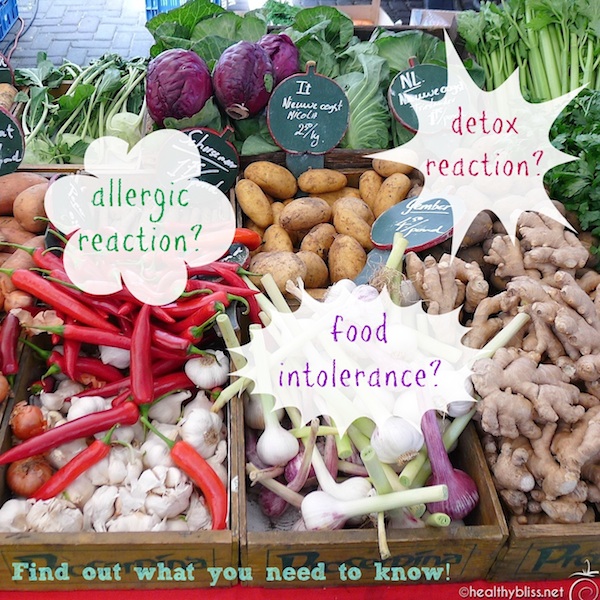
Symptoms of a Detox Reaction vs. Allergic Reaction

Symptoms of a Detox Reaction vs. Allergic Reaction

I’ve been in this field for a long time and I want to share with you one of the biggest mistakes that people are making today in the world of detox and natural health: They are calling everything a detox reaction.

In my opinion, the most “over-diagnosed” and incorrect problem that people get labeled with when they’re eating healthy (especially high raw food or vegan) but still feeling bad is: 1) They have candida or 2) They are still detoxing. I’ll address the candida issue in another post, but I can tell you that in my experience of seeing well over 4,500 clients, 95+% of the time, both of these assessments are false.

Did you ever consider that you might actually just have a food intolerance or sensitivity to a food additive? Believe it or not, this happens much more than you could ever imagine. And, when you take the suspicious food out of your diet, you can feel better in a matter of days. Finally, you can start enjoying some real healthy bliss! Read on to understand the difference between a real detox reaction and a potential allergic reaction or an intolerance to a food or food additive.

What is a Detox Reaction

When your start to do a detox, as old, excess toxins flush out and unwanted bacteria, microbes and viruses die off, you can actually experience a temporary detox or cleansing reaction. Based on the work of Dr. Karl Herxheimer in the late 1800s, this temporary feeling of illness is known as the Herxheimer effect and is actually an intense sign of healing. These reactions can indicate that your body has started to cleanse itself as it quickly tries to catch up on the overload of toxins being released.

Symptoms of a Detox Reaction

  • Mild headaches, nausea, chills, sweating.
  • Fatigue, aching muscles.
  • Mucous, body odor, rashes.
  • Dizziness, weakness or even foggy brain.

Typical Length of a Detox Reaction

A detox reaction will last anywhere from a few minutes to a few hours. If you are experiencing a real “healing crisis,” normally that will last from 1 to 3 days total. Usually after the detox reaction, you feel amazingly better, and you will not have that symptom again. For example, you could feel chills or nausea or intense exhaustion, then a few hours later (or after an enema), feel totally energized.
Click on the Disclaimer Link below to read the full disclaimer for this website!

Click on the Disclaimer Link below to read the full disclaimer for this website!

What is an Allergic Reaction or Intolerance

True allergic reactions are much more rare than intolerances but they’re definitely on the rise (thank Monsanto and GMO foods for that). According to the World Health Organization (WHO), there’s been a continued rise in allergic diseases in the industrialized world for over 50 years.

An allergic reaction occurs when your body sees a food such as shellfish, peanuts or wheat as a foreign body or allergen, and starts to attack it by creating antibodies and inflammation.

Symptoms of an Allergic Reaction or Intolerance

The symptoms of an allergic reaction can vary from mild to severe. If you are exposed to an allergen for the first time, your symptoms may be mild. These symptoms may get worse if you are repeatedly exposed to the allergen.

According to the Mayo Clinic, The most common food allergy signs and symptoms include:

  • Tingling or itching in the mouth.
  • Hives, itching or eczema.
  • Swelling of the lips, face, tongue and throat or other parts of the body.
  • Wheezing, nasal congestion or trouble breathing.
  • Abdominal pain, diarrhea, nausea or vomiting.
  • Dizziness, lightheadedness or fainting.

If you have a food additive intolerance, such as an intolerance to Monosodium Glutamate, you can experience:

  • Headaches, chills, fatigue, aching muscles, dizziness.
  • Insomnia, sensitivity to light or sound.
  • Heart palpitations.
  • Fatigue (especially the following day).
  • Abdominal pain, diarrhea, nausea or vomiting.
  • Hives, itching or eczema.
  • Swelling of the lips, eyes, face, tongue and throat or other parts of the body.
  • Wheezing, nasal congestion or constricted breathing.

Typical Length of a Food or Food Additive Allergy/Intolerance Reaction:

An intolerance or allergy can last indefinitely, especially if you continue to eat the food or use the product that you are intolerant to. The problem with “intolerances” is that they usually have a delayed reaction time and they don’t give nearly as severe a reaction as an “allergy.” That’s why they can easily go undiagnosed for years. After a reaction, you may feel temporarily better, but if you eat the suspect food again, you will have the exact same symptoms over and over and never find yourself feeling better.

As you can see from looking at the above lists, it can be easy for a novice to label a food allergy or intolerance incorrectly and call it a detox reaction – the symptoms are almost exactly the same! In rare cases when someone is taking too many detox supplements or doing too many detox protocols at once (far infrared sauna, colonics, zapper, parasite cleanse, heavy metal detox etc.), I recommend to slow down the detox itself and determine the best order and pace of detox for the individual.

In the old days of detox, almost 20 years ago, no one was doing this stuff and the people who were really knew what they were doing. In the world of detox today, there is a TON of misinformation out there. Someone who made 1 green juice or fasted for 3 days is suddenly on every forum as the guru of detox. As with everything, this is a blessing and a curse at the same time. It’s a blessing because more people are getting out there and trying a fast or cleanse for the first time and that is simply awesome. And I no longer get booed out of a room for talking about coffee enemas, lol! But it’s a curse because people are being misled down the wrongs roads.

What kind of foods can you be intolerant to?

You can react to certain fillers in supplements (like malodextrin); chlorella in your green powder blend, Miso soup, seaweed snacks, vegan butters, vegan mayonnaise, and pesticides. I’ve even had clients react to whole foods like tomato paste, sesame seeds or celery. Once we get that food out of the diet, the reaction goes away and then we know for sure that we’re dealing with a classic food intolerance and not a detox reaction. How does it work? I can usually identify which foods you need to remove after 25-30 minutes of Q&A about your symptoms, current diet or recent detox.

If it is a detox reaction, then a few things to get you through a healing crisis include: a castor oil pack, detox onion socks, epsom salt baths, activated charcoal, liquid bentonite clay, extra Vitamin C, magnesium, distilled water, prayer/meditation (to maintain an alkaline pH) and rest.

For more on how to do a detox at home or how to navigate through your detox symptoms and start feeling great, book a private health consult with me via Skype.

How to Book Your Health & Nutritional Coaching Session:

1. Take photos of your eyes with a digital camera.
2. Email the photos to me for approval.
3. We schedule a time to meet via phone or Skype!

More on Detox Reactions:
What are the symptoms of a Herxheimer (Detox) Reaction?

More on Detox: