Top 10 Secrets for Good Health and Longevity: How to Create Your Personal ‘Blue Zone’

If you want to know the best way to do something, you find a successful person and ask them how they did it, right?

That’s exactly what researchers have done in search of the healthiest places in the world to live, also known as ‘Blue Zones,’ a term coined by demographers who started mapping out areas of the world where people live measurably longer lives. Two noteworthy books of interest have been written on the subject: The Blue Zones: 9 Lessons for Living Longer by Dan Buettner and Healthy at 100 by John Robbins. I’ve recently found myself drawn more and more to explore what secrets our elders hold in finding the real truth to an anti-aging diet, or a longevity diet or a ‘youthgevity’ diet…probably terms that our elders at 90 years of age and older have never even heard of!

All information in this article is for educational purposes only.
It is not for the diagnosis, treatment, prescription or cure of any disease or health condition.
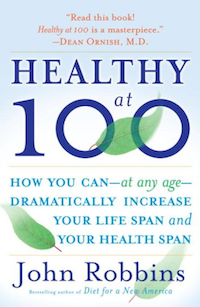
Healthy at 100 by John Robbins

The Blue Zones: 9 Lessons for Living Longer

Especially in answering countless questions from workshops and talks around the world, a large portion which involve questions such as ‘what’s the BEST food for (insert dis-ease name here)’ or ‘what’s the BEST supplement I need to take’ or ‘what food will help me (insert goal here: lose weight, be happy, feel great, clear skin, gain energy, cure constipation, improve eyesight, increase fertility, reduce anxiety, etc. etc. etc.),’ I can see from a wider perspective that, well, basically, people are just not getting it! No one food creates disease and no one food cures it either! We have to start looking at the diet and lifestyle as a whole to start getting the results we want.

We all know that no one can eat a handful of watercress and become instantly cured!

I hope you can agree with me there. People don’t want to hear that they may have to make long-term changes to their diet and lifestyle in order to get long-term results, especially in this fast-fix world that’s programmed to appease all instant gratification requests. And, if you try the ‘magic pill method’ by taking every new Dr. Oz must-have supplement, after one year of watching Dr. Oz every day you will need to take 365 supplements per day in order to keep up! Clearly, that doesn’t seem like the best approach to real health!

So, what is it? How do we find the key to Longevity and Happiness?

Healthy at 100 by John Robbins

Healthy at 100 discusses several of the more known but perhaps under-documented world Blue Zones such as the Hunza Valley in Pakistan and Vilcabamba, Ecuador (where I am currently staying for 2 months by the way!) and also discusses more well-documented Blue Zones such as Okinawa, Japan. When I say ‘documented,’ that means being able to prove the person’s identity and being able to verify their date of birth with local birth records, so we can say with absolutely certainty that the centenarian (a person who lives over 100) who lives there is really a centenarian.

Blue Zone vs. SAD Diet

The main difference between a Blue Zone diet and a Standard American Diet (SAD) is that the Blue Zone cultures eat no refined sugar and no refined carbohydrates; and instead eat plenty of whole grains and many vegetables grown locally and in season, and they incorporate healing foods and superfoods into their diet naturally. According to John Robbins, the author of Heathy at 100, “Vegetables play a prominent role in the Hunzan diet, particularly greens, including mustard greens, spinach and lettuce, root vegetables such as carrots, turnips, potatoes, and radishes, an assortment of beans, chickpeas (garbanzo beans), lentils, and other sprouted legumes. They cultivate many kinds of herbs for both culinary and medicinal purposes, including mint and thyme. They grow flaxseeds, and rare is the meal that does not contain freshly ground flaxmeal in one form or another. In Hunza, a large part of the diet is eaten uncooked.”

He goes on to explain, “In the summer, as much as 80% of the food is eaten in its natural state. Vegetables in season are picked just prior to consumption and almost always eaten raw. Fresh corn on the bob, for example, is never cooked. In the winter, Hunzans soak lentils, beans and peas in water for several days, then lay them out on wet cloths in the sun. They are eaten raw when they begin to sprout.”
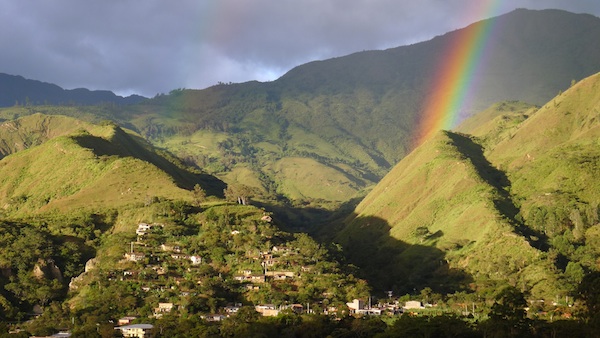
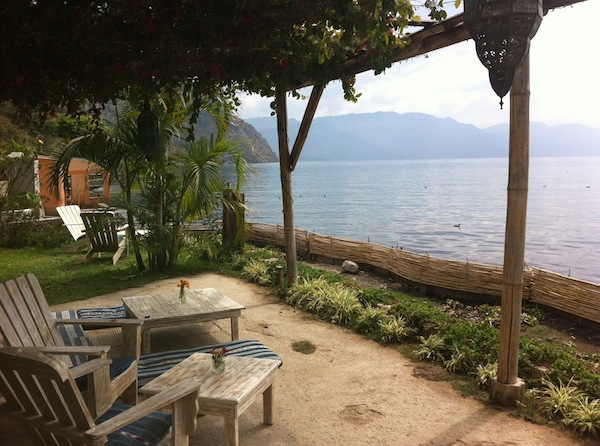
The view from my house in Vilcabamba, Ecuador, an ‘unofficial’ Blue Zone

Exercise also plays a huge role in the anti-aging process. Every area that was researched highlighted daily exercise as an integral part of life, and the people know that this is one of their secrets to vibrant health. “So great is the recognition of the healing power of walking to visit a friend that there is a saying in Vilcabamba that each of us has two ‘doctors’ – the left leg and the right leg,” writes John Robbins.

What’s happening in the good ‘ol USA

  • How many of us numb ourselves with cigarettes, tranquilizers, drugs, alcohol, or unhealthful diets in an effort to escape how isolated we feel?
  • How many of us become chronic workaholics or become preoccupied by other unhealthy obsessions in an attempt to avoid the inner barrenness caused by the breakdown of relationships, family and community?

He adds, “Many of the traditional Okinawan proverbs about eating sound like phrases you might find on the wall of a health food stores in the West. One such proverb translates as “Food should nourish life – this is the best medicine.” And another: “One who eats whole food will be strong and healthy.” If North Americans lived more like the elder Okinawans, we would have to close 80% of the coronary care units and 1/3 of the cancer wards in the United States, and a lot of nursing homes would also be out of business.”

Hmmm, that sounds pretty good to me!

Top 5 Secrets for Longevity and Anti-Aging from Healthy at 100

    1. Eat many colors. Foods’ natural colors are not just treats for the eye but also signs of important nutrients such as antioxidants.

    2. When you crave something crunchy, try raw vegetables or nuts instead of salty chips.

    3. Avoid heating oils to the smoking point. For the fat in your diet, eat walnuts, almonds, hazelnuts, sunflower seeds, avocados and other nuts and seeds.

    4. Shun trans-fatty acids. Stay away from margarine, vegetable shortening, commercial pastries, deep-fried food, and most prepared snacks and convenience foods.

    5. Don’t pollute your body. Don’t eat junk food. Go to your kitchen cupboard and get rid of any food products that no longer serve your potential to be radiantly fit and healthy.

The Blue Zones: 9 Lessons for Living Longer

Now, let’s look at the Blue Zones: 9 Lessons for Living Longer, and see what Dan Buettner, the author, discovered after traveling to 5 current and documented world Blue Zones: Nicoya Peninsula in Costa Rica, Sardinia in Italy, Okinawa in Japan, the Seventh-Day Adventists community in Southern California USA, and Ikaria in Greece.

“Good Years” is a Very Important Concept

In the book, Robert Kane point out that, “there are two issues here. How long can I live? The other is: How well can I live? And those are different questions. Living an extra two years on life support may not necessarily be your goal. Yes, “Good Years” is a very important concept.”

“You’ve got a bunch of people who are professing to be physicians or scientists, who are saying that they can stop or reverse the aging process. I will tell you that real scientists cannot do such a thing, so what makes the public think that these people can?” asks Tom Perls.

Things that Successful Centenarians Don’t Do

They don’t get plastic surgery or botox i.e. get unnecessary surgeries which can weaken their immune system; They don’t watch excessive amounts of television; They don’t complain, gossip or criticize others; They don’t worry or stress about the small things; They don’t overeat. In Japan, they say “Hara hachi bu” before each meal. This is a Confucian-inspired saying that means “Eat until your are 80 percent full.”

Things that Successful Centenarians Do

They eat natural, whole and pure foods high in flavonoids and natural anti-oxidants; They eat simple, non-processed local foods; They exercise as part of their daily routine, usually walking long distances (more than 2 miles and up to 6 miles) every day; They incorporate healing foods like turmeric, ginger and mugwort into their daily diet; They maintain a sense of purpose, keep a sense of humor and they have a positive outlook on life; They keep the family unit together, taking care of elders within the family even at the later stages in life (that’s the power of love!).

Top 5 Secrets for Longevity and Anti-Aging from The Blue Zones Book

    1. Eat more plants (i.e. leafy greens)! While not all centenarians are vegetarians, they all eat a very high vegetable and fruit-based diet with variety in whole nuts, seeds and grains. If they eat meat or fish, it’s only on occasion and not in the daily diet. They also eat simple meals with only whole, natural ingredients.

    2. Stay active. Get outside and walk every day. Work on a small outdoor garden. Getting regular, low-intensity exercise like daily walks appears to help reduce your chances of having heart disease and certain cancers.

    3. Have a sense of purpose and keep hard at work. Successful centenarians feel needed and want to contribute to a greater good. They enjoy physical work all of their lives (i.e. no couch potatoes!!).

    4. Drink fresh herbal teas made from peppermint, oregano, rosemary, chamomile or sage on a daily basis. Add healing foods like fresh turmeric and ginger to your diet. This helps your body detoxify on a regular basis, naturally!

    5. Take time to rest and fast occasionally. The Seventh-Day Adventists practice a weekly Sabbath or day of rest to spend time with the family and re-connect with nature. In Greece, The Ikarians traditionally follow the Greek Orthodox Christian calendar which calls for periodic fasting throughout the year.

Caloric restriction -a type of fasting that cuts about 30 percent of calories out of the normal diet -is the only proven way to slow the aging process in mammals.

How to Create your ‘Personal Blue Zone’

    1. Eat a high-raw food organic and nutrient-dense diet.
    2. Minimize stress. Laugh More. Enjoy each day!
    3. Exercise daily – get out and move.
    4. Form friendships and meaningful relationships.
    5. Have a sense of purpose with your life.

Or, as Michael Pollan said, “Eat food. Not too much. Mostly plants.”

Your Happiness and Longevity Matters!

So there you have it! Everything this website and my life’s work is all about will help you to lead a healthy happy, long enjoyable disease-free life! Let’s keep supporting each other on our journeys enjoying good health and a happy life!

More on Longevity:
Reconnect with Nature in Guatemala with Fresh Juice, Raw Food, Mayan Ruins & Volcanoes

Guatemala is a country full of culture, colorful handicrafts, Mayan ruins and lots of nature and it’s a great place to visit for a health holiday! I recently spend 1 month in Guatemala and I’m going to share my top-picks, favorite restaurants and must-see things to do.

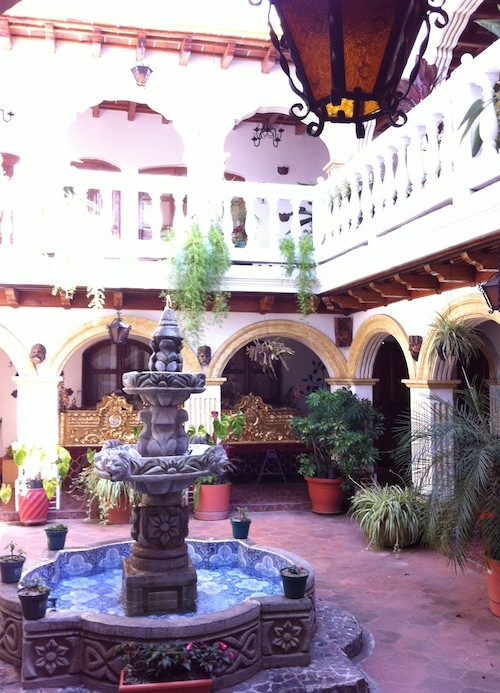
Central Courtyard in Antigua, Guatemala

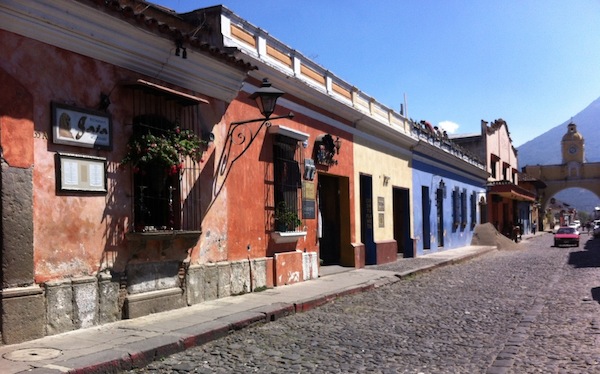
Most people fly into Guatemala City when they arrive to Guatemala. Since the quaint, picturesque town of Antigua is only 45 minutes from Guatemala City, it’s a good idea to take a taxi or arrange hotel pickup directly from the airport to Antigua and start your adventures there (it’s about $30 for a private taxi). Antigua is the former capital of Guatemala and is full of Spanish architecture, cobblestone streets and many courtyard gardens behind the ancient walled streets. This is a good place to spend 4-5 days so you have time to take a tour, explore the local market, visit a nearby volcano or Mayan village, soak in natural hot springs, enjoy some of the restaurants and maybe even schedule a massage. Now that sounds like a holiday!

Old and beautiful downtown Antigua

Guatemalan decoration, handicraft, style, love!

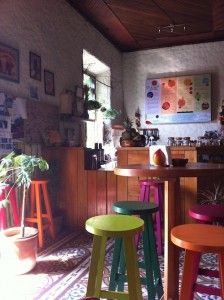
Inside Pitaya Juice Bar in Antigua

My favorite morning stop in Antigua was at Pitaya Juice Bar, across from the Antigua Gym. It’s a small but very cute place and they serve fresh juice or superfood smoothies with moringa, ginseng, flax or wheatgrass, for a healthy start to the day (Pitaya Juice Bar: 6ta Calle Poniente, #26). For lunch, I frequented Sabo Rico, an outdoor garden restaurant serving salads, juices and smoothies in a gorgeously romantic courtyard (Sabo Rico: 6a avenida sur #7).

Dinners were typically made at the hostel using fresh raw foods bought at the local market and raw apple cider vinegar or coconut oil from the main health food store in town, Organica (5 calle poniente No. 6, just 1 block from the main square). Organica also has a small range of gluten-free foods for sale. Everything in Antigua is walkable which makes it very nice as a tourist.

My top picks for things to do in Antigua

Walking Tour with Elizabeth Bell

Definitely take Elizabeth Bell’s walking tour which runs every Tuesday, Wednesday, Friday and Saturday from 9:30am to 12:30pm and meets at the central fountain in the main square. Elizabeth’s knowledge and enthusiasm over all things Antigua and Guatemala is absolutely amazing, impressive and inspiring. This was absolutely a highlight of Antigua form me; the $20 was well spent for the tour.

Santo Domingo Hotel’s restaurant on the hill: Santo Domingo del Cerro

If you plan your day correctly, you can continue on your own at the end of Elizabeth’s tour at the Santo Domingo Hotel in downtown Antigua and from there, take the hotel’s free shuttle up the hill to their restaurant, the Santo Domingo del Cerro. Most likely you’ll be hungry after the tour and in daylight hours, you can enjoy all their unusual outdoor art sculptures and take in the views of surrounding volcanoes while enjoying a nice healthy salad. I had a delicious apple and watercress salad and was very happy to see that on the menu as a reasonable raw food choice. For anyone looking for a nice place to do work online (to write blog posts or update twitter feeds a-hem), the Santo Domingo del Cerro has a very nice terrace with free wifi, so you can spend the rest of your afternoon there and catch up on some work!

Wednesday at the Kawilal Hot Springs

Every Wednesday, the Kawilal Hot Springs and Spa offers a free shuttle that leaves at 9am from the Cathedral (it returns back to Antigua at 3pm). It’s a 1-hour ride to the hot springs so the free Wednesday shuttle is really the best option for tourists. The spa offers different packages with or without massage and it’s a bit expensive ($85 for hot springs and massage) for what it is and for Central American prices. For that reason, I would recommend a cheaper package using only the hot springs. The pools are still great and I fully believe in the healing powers of natural hot springs, so I personally seek them out wherever I go! This is a nice break from Antigua and a good option for a quiet afternoon soaking in the natural healing energy of thermal waters.

Outside Antigua: Tikal, Semuc Champey & Lake Atitlan

Tikal National Park

If you have the time, take an overnight bus to the northern part of Guatemala where you will find the ancient Mayan city and UNESCO World Heritage Site at Tikal National Park. We managed to find an honest tour company to book our bus tickets directly across from Pitaya Juice Bar. I don’t remember the name, but the staff wore Lonely Plant t-shirts and we received the correct price for the bus (not always an easy thing to achieve in Guatemala!). Speaking of which, be sure to book your accommodation before arriving to Flores; otherwise you will be absolutely mobbed by booking agents trying to lure you into other hotels and various park tours. We booked online in advance directly with Los Amigos Hostel, and we arranged our Tikal sunrise tour and onward bus tickets inside the hostel, at the very back, during office hours only. Flores is known for thieves operating as tour guides preying on the weary traveler arriving at 5am; we heard more than a few stories of this during our brief 2 days there. So be careful!

A great option for your first day in Flores is to rent kayaks at the hostel and paddle around the lake. It’s a wonderful feeling to get out on the water and to just glide with every stroke closer to the other side, then power-paddle back. Get to sleep well and truly early, because the the sunrise tours leaves at 4am! The tour takes you into the park to sit atop one of the Mayan temples and experience ‘the jungle waking up’ with sounds of howler monkeys, toucans and other birds. It’s great! A few more hours to explore the park gets you back to the hostel in early afternoon.

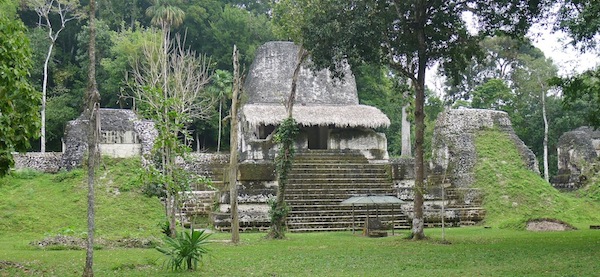
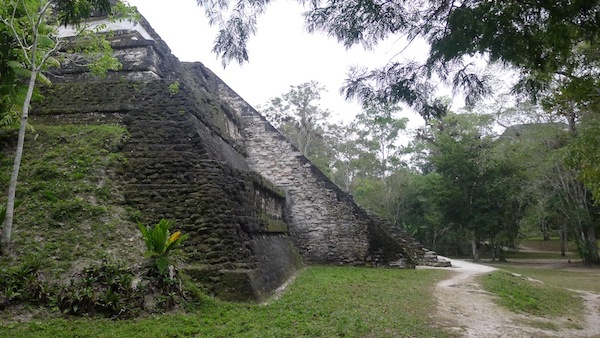
Ancient Mayan Civilization at Tikal National Park

Tikal National Park, in the jungles of northern Guatemala

Imagine the sounds of tropical birds and howler monkeys all around you…amazing!

Semuc Champey

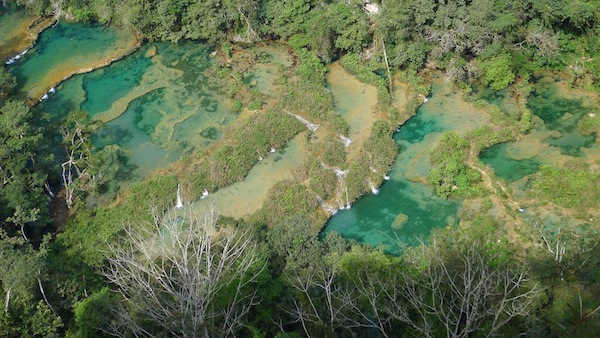
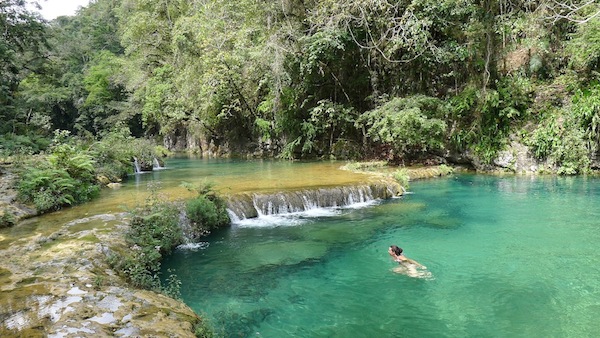
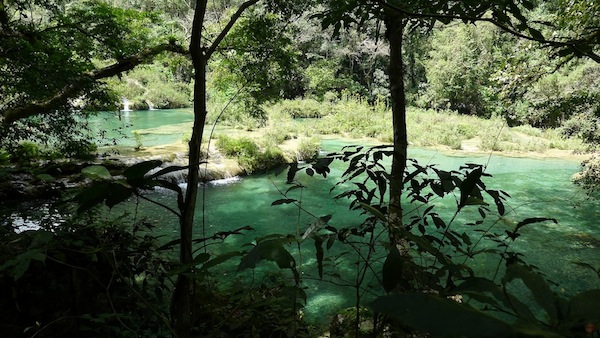
The next day, you can head to Semuc Champey, about 6-8 hours by minibus from Flores. It’s not as comfortable to travel by minibus but there is no big bus that goes to Semuc Champey. Once you get there, you will see that it is well worth the effort! Semuc Champey is a gorgeous set of natural limestone bridges that’s located deep in a mountain gorge and covered with crystal blue-green water. You have to see it to really appreciate how magnificent Mother Nature can be. You only need one day to see the park, but many people stay at either one of the hostels for a few days just to relax and well, mainly to party. The backpacker party thing wasn’t my scene so I only stayed 2 days to see the park and do the cave tour, and I continued on my way to Lake Atilan.

Semuc Champey…simply amazing natural wonder!

Reconnecting with nature…is healthy bliss! At Semuc Champey

In awe of Mother Nature’s beauty at Semuc Champey

Save the Best for Last: Lake Atitlan

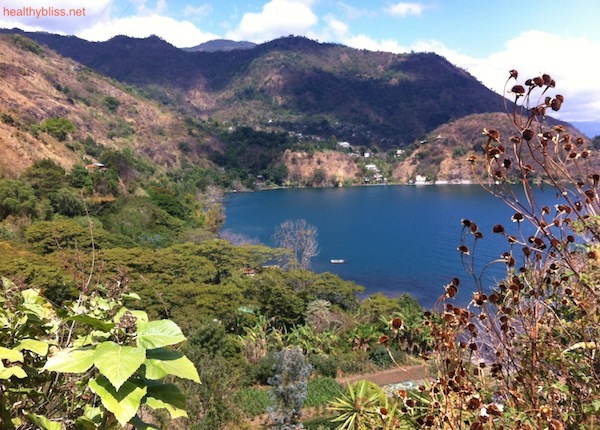
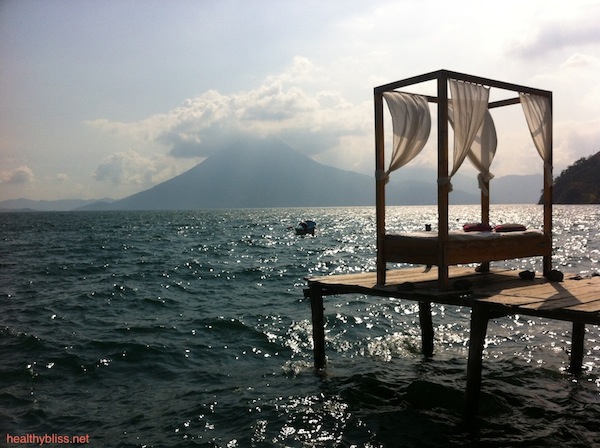
My best advice is exactly that: Save Lake Atitlan for the end of your Guatemala travels and take some time to rest, relax eat good food, or even rent a house along the lake and plan to do your own juice or water fast while there. Lake Atitlan is a popular destination for yoga, healing, raw food, meditation and spiritual retreats due to its magical energy field. It’s claimed to be one of the worlds’ energy vortexes, alongside the great pyramids and Macchu Picchu. The lake itself is surrounded by volcanoes, and when we were there, San Pedro volcano was visibly active, which was just amazing to see!

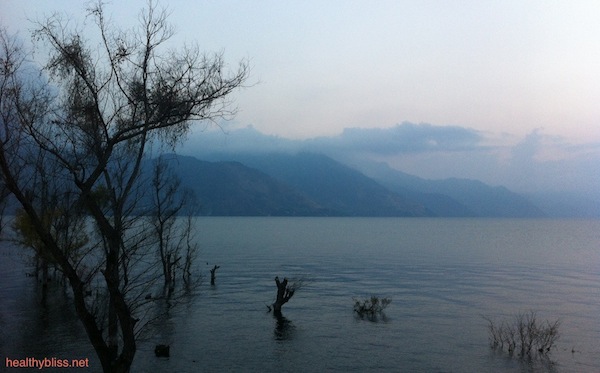
Beauty and nature at Lake Atitlan

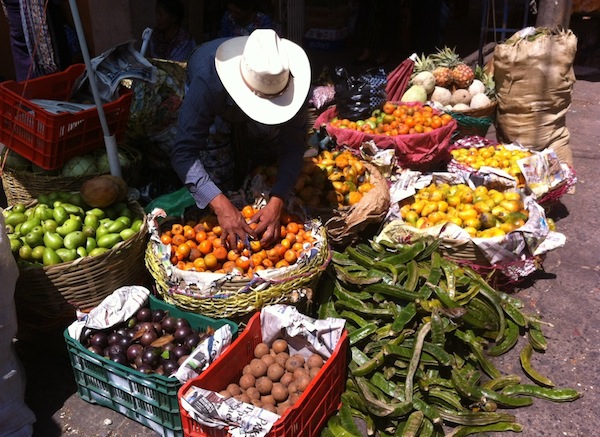
Local fruit and vegetable market

Many of the health-enthusiast tourists stay in the village of San Marcos on the lake. In my opinion, it was a bit too hippie and we searched for something a bit more scenic and peaceful, with good views of the lake, good internet and decent sense of security. We found exactly that at Sakcari Hotel in San Pedro. While not cheap by Guatemala standards at $40 per night, Sakcari was everything we were looking for – it was quiet and on the lake with incredible views from the room and a real feeling of nature. Nearby in the village, we could get fresh fruit, fresh juice and smoothies every day. There is also a great health food store in San Pedro; it’s small but well-stocked with herbs, supplements, natural body products and some dried organic nuts and seeds. What more in life does one need?

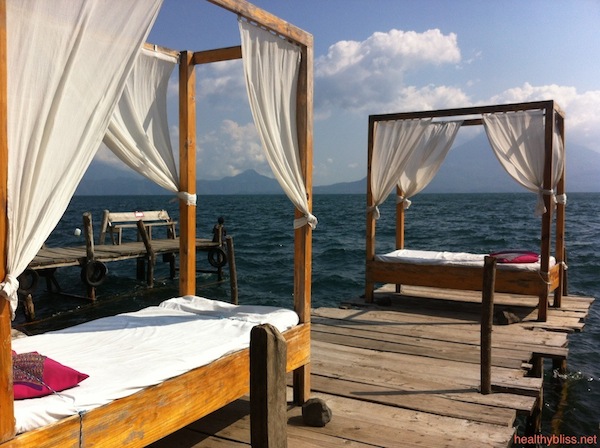
A nice place to contemplate life, on the shores of Lake Atitlan

Fresh air, views of nature…this in and of itself is a cleanse!

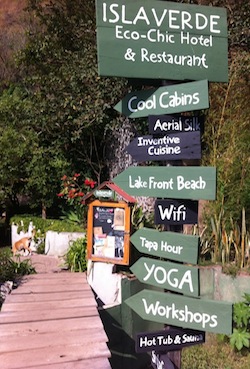
Isla Verde Eco-Resort with its famed ‘slow-cooking’

We checked out some other spots and also looked at a few houses and apartments to rent on Lake Atitlan because we considered staying longer, up to 1-2 months. After a good amount of searching, there is only one place I would recommend and that’s the PasaCap property, owned by Pierre, a Frenchman living on the lake for more than 15 years. Pasacap has very modern and clean furnished apartments with perfect lake views on a secure property with a private dock to access the lake. We seriously considered renting an apartment here for 1-2 months so I could do a long water fast, but unfortunately the units were fully booked at the time and I didn’t want to wait a month for availability. I would definitely consider returning at a future date, and securing the booking in advance online. To have the chance to do a water fast on a major world energy vortex….well that’s just ‘Wow!’

There were a few other highlights on the lake for healthy eating and raw food, both in the village of Santa Cruz. The first, Isla Verde Resort, is a beautiful place with a gorgeous restaurant overlooking the lake. They are known for their ‘slow cooking,’ but we found that they may have taken this term a bit too far…by adding ‘slow ordering,’ ‘slow service,’ ‘slow preparation,’ and ‘slow to settle your bill.’ In short, the entire experience was SLOW. But, they did have some nice juices, salads and a great homemade kombucha drink that is worth waiting to order, receive and pay for!

View of Lake Atitlan from Isla Verde Resort

Mayan Cacao Energy Balls at Villa Sumaya

The other place is also in Santa Cruz, but in the opposite direction from the dock. When you exit the boat taxi, walk to the right and follow the maze of planks and boardwalks (which is really fun by the way!); after about 30 minutes you will arrive to Villa Sumaya.

Villa Sumaya is a yoga and meditation retreat center and it’s a great place to consider staying for a few nights if your budget allows. Otherwise, do what we did and visit during the day, enjoy a delicious fruit smoothie, sample their raw cacao superfood snacks and take a few raw energy balls home to nibble on later.

Whatever extra time you have in Guatemala, definitely spend it at Lake Atitlan. The views of the lake and surrounding volcanoes change with each day’s cloud formations and sun, a real-life painting waiting for you to slow down and simply enjoy its natural canvas. It’s a place that really grows on you after awhile.

Quiet time in nature is good for the soul

Safety in Guatemala

This is something worthy of noting and needs to be addressed for your personal travel safety. While absolutely nothing happened to use during our 4 weeks in Guatemala, we did meet a few tourists who had been robbed, mugged or ripped off. Some important things to remember: Do not show your iPhone or smartphone in public areas; Do not wear expensive jewelry; Carry a purse that hangs across the body from shoulder-to-hip and not on one shoulder only; Do not carry valuables at night; Do not carry a lot of cash at any time; Ask around at several travel agents to compare prices before booking anything. Again, we had nothing happen to us, but we heard quite a few stories. Personally, I always lock all valuables in my suitcase in the hotel room at all times. The temptation for a cleaning lady or other hotel staff to look around is just too great, so why take the risk? Once you get into the habit of doing that, it becomes very easy and it’s much ‘safer’ than a front desk safe where other staff may also have a key. You can definitely enjoy Guatemala without any problems if you follow these simple safety tips. With so much to see and enjoy; it’s a country worthy of a visit!

More on Traveling Raw:

Panama as a health destination? Warning about pesticides in fruits and vegetables

After 2 amazing weeks in Costa Rica, we decided to head south to Panama to see what it had to offer. With the same Caribbean beaches, mountains and tropical landscape, I expected a cheaper and less touristy version of Costa Rica. I wanted to explore what raw food and/or detox options were available and thought I would get some nice time in nature and sun to boot. It seemed like a good idea…or so I thought.

All information in this article is for educational purposes only.
It is not for the diagnosis, treatment, prescription or cure of any disease or health condition.

Ajonjoli, Raw Food in Panama City

Everything started out great when we arrived to Panama City and stayed in an awesome funky little hotel, the Lemon Inn, run by 2 young Panamanian brothers. What a treat to get a modern clean hotel room after paying so much for accommodation in Costa Rica. Thanks to one of my twitter followers, I managed to find Ajonjoli on my first day in the city – a health food store and raw food meal service offering home delivery with a different daily raw food meal. I was very impressed to see such a service in Panama, and the food was great!

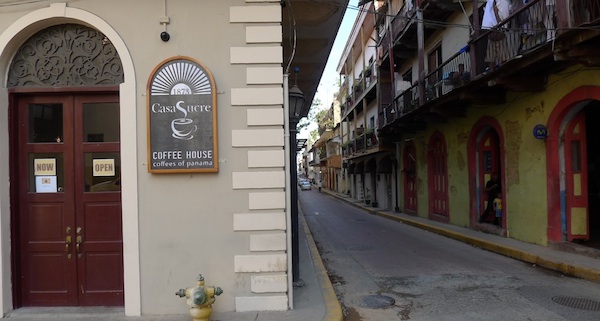
More time in the city allowed us to explore the old part of the city, Casco Viejo, which I loved…and as we walked through the streets I could almost feel I was in Paris or Belgium. Well, except for the armed policemen on every corner. At least you feel much safer in Panama than in other Central American countries. In the afternoon, we took a taxi out to see the Panama Canal and were lucky to arrive just as one of the container ships was moving through the docks. It’s definitely an example of some fine engineering.

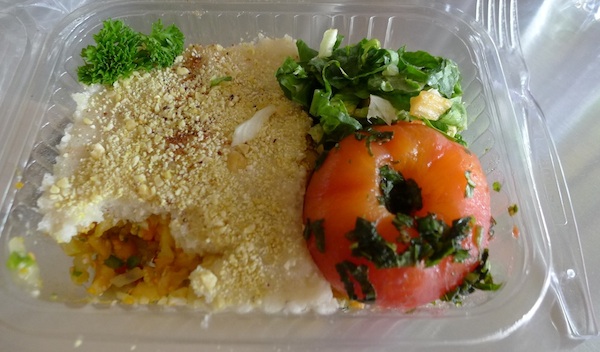
Organic Raw Food Lunch from Ajonjoli in Panama City, a safe and yummy choice!

Casco Viejo in Panama City

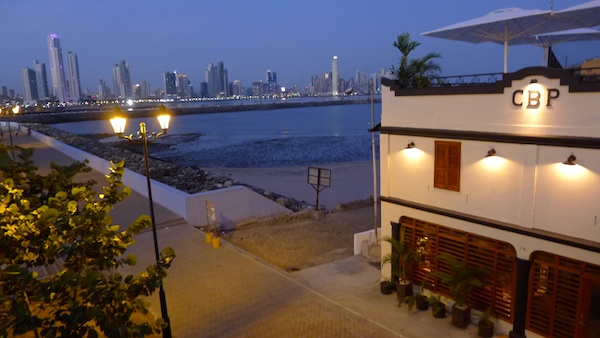
Panama City at night, view from Casco Viejo

Panama Canal, Panama City

After 2 days in the city, we headed out to the mountain town Boquete, famed as one of the top retirement destinations for Americans. We thought it would be an organized town with some nice restaurants and cafes, but were surprised to find what looked like an abandoned town from the Wild West with local Panamanian women in traditional dress and lots of SUVs with grey-haired gringo elders. Lots of SUVs. There seemed to be no interaction between the expat retiree gringo and the locals; in fact we met many Americans who lived there for 5 years or more and spoke no Spanish. We found that to be very strange and I realized that this was not a cohesive community. But our worst discovery by far was in the fruit and vegetables.

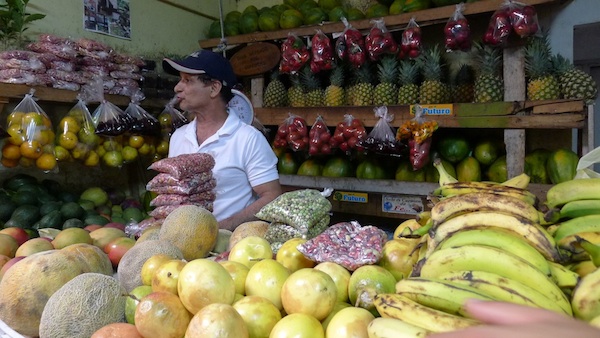
Fruit and veggie market in Boquete, Panama

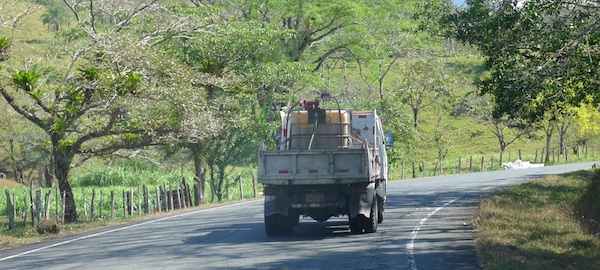
I don’t think I want to know what’s in this truck!

Reaction to Pesticides in Fruit and Vegetables

After buying fresh cabbage, cucumbers, tomato, onion, papaya and banana at the local market we were excited to go back to the hostel to make some yummy raw food creations. That night, I developed a horrible headache (something I never get)…and for days I had headaches, felt tired and even had a burning sensation in my throat, like a chemical burn. It finally occurred to me that it might be a pesticide reaction from the food. It didn’t take me long to make some Google discoveries about pesticide use in Panama and how the local farmers are using carbofuran, a very strong pesticide which is currently banned in Canada and the EU (in addition to many other banned pesticides as well). This was my first ever reaction to a pesticide as such, but it really scared me, especially the burning in my throat. We did not use any olive oil, salt or spice of any kind and still, I had horrible headaches daily. This discovery wound up crossing off Panama from my list of tourist destinations, well at least for anyone who is health-oriented or chemically sensitive. We did our best to make the most of the time we had, but our overall morale and feeling about Panama remained low for the remainder of our stay.

How to clean pesticides out of fruits and vegetables

For anyone who is traveling to Panama, I highly recommend bring Activated Charcoal Powder to pull the chemical pesticides out of your produce. This is how it’s done: Fill a bucket with water and add 2 tsp. of loose “activated charcoal powder” (in Thailand this is sold in health food stores specially as a vegetable cleaner). Soak all fruits and veggies for 10 minutes in the charcoal/water mixture, then rinse. Be sure to peel all vegetables before eating, even tomatoes. This will significantly reduce your exposure to these harmful pesticides and should minimize any reaction.

Please note: I have seen some websites that wrongfully promote Grapefruit Seed Extract (GSE) as a way to pull pesticides from produce. While GSE is great for killing bugs and harmful bacteria, it does NOT pull pesticides out of fruit and vegetables. Charcoal is an absorbing agent, like a sponge; while GSE is a cleaner of bacteria. Ideally, if you have the time and patience, you should first soak your produce in a Charcoal/Water mixture for 10 minutes, rinse, and then soak in 12-15 drops of GSE/water mixture for 10 minutes to clean any bacteria and eggs.

Boquete and Bocas del Toro

We decided to stay a few days in Boquete and take advantage of the one good thing we found: a 1-week membership to The Haven Spa; for $50 USD per person we had access to the gym, swimming pool and far infrared sauna for the week…so our daily ritual was to leave the backpacker hostel at about 11am each day and spend the whole afternoon relaxing in the quiet nature of the Spa. It was a bit strange that all the other members seemed to be 60 years old or greater and on most days I felt like we were in a re-make of the Ron Howard movie ‘Cocoon,’ but as tired weary travelers, we were most grateful for the tranquility of the place and I really enjoyed my daily far-infrared treatment, know to be a great detoxifier of heavy metals and chemicals (needed even moreso due to the circumstances!).

The Haven Spa, Boquete Panama

Exercise pool at The Haven Spa, Boquete Panama

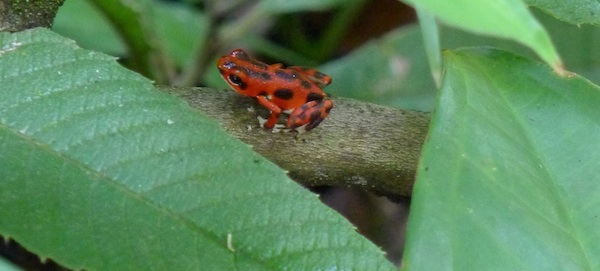
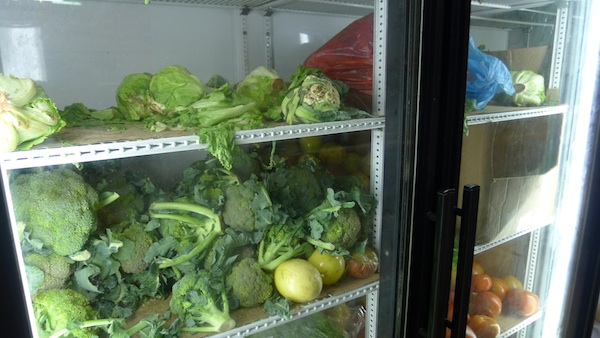
From Boquete, we ventured north to the Caribbean islands at Bocas del Toro, a famous destination in Panama for beach, sun and nature. A highlight for me was searching for red frogs on the island of Bastimentos and finding them ourselves, without a guide, and in nature…it was a small discovery but it felt so cool to find such a beautiful creature! Overall. I found the availability of raw food to be very bad on the islands. The grocery stores are owned by a Chinese mafia and the vegetables are black with mold and the lettuce and cabbage are wilted (and with heavy pesticides to boot). We initially thought to spend a few weeks in the islands but after a few days, we felt starved for real food and fresh produce so we headed back to Panama City and flew north to Guatemala.

Bocas del Toro, Panama

Taking the boat from Bocas to Bastimentos Island

Finding the elusive red frogs on the island of Bastimentos

Bastimentos Island…beautiful, but no decent raw food!

Poor vegetable choice in Bocas del Toro

My suggestion for Panama is this:

Definitely check out Panama City as it is an interesting place and there is plenty of fruit and vegetables in the supermarket. From what I read, the villages are using more potent mixtures of pesticides, and most likely, no one is regulating how much or what mixtures should be used. More mass-produced supplies in Panama City should be better (and I did NOT react to any produce in Panama City; only in Boquete and Bocas). That said, I did find a local expat, Kirk Floeck, owner of Organic Harvest, who is currently working on an at-home delivery service of organic fruit and vegetables for Panama City, so if you do live there, contact him for details: kfloeck [at] hotmail [dot] com. Also, sign up for the at-home delivery of vegan, raw food, gluten-free meals with Ajonjoli, another great healthy option for people in Panama City:

Ajonjoli
FB page: http://www.facebook.com/ajonjolinatural
Calle 65, San Francisco, Panama City, Panama.
telephone +507 394-8024

There are better choices for organic raw food, vegan and gluten-free health holidays in Central America in Costa Rica or even Guatemala.

More on Traveling Raw: